What is "Ahimsâ" or the principle of non-violence in Buddhism
- 7 Feb 2026
- 16 min read
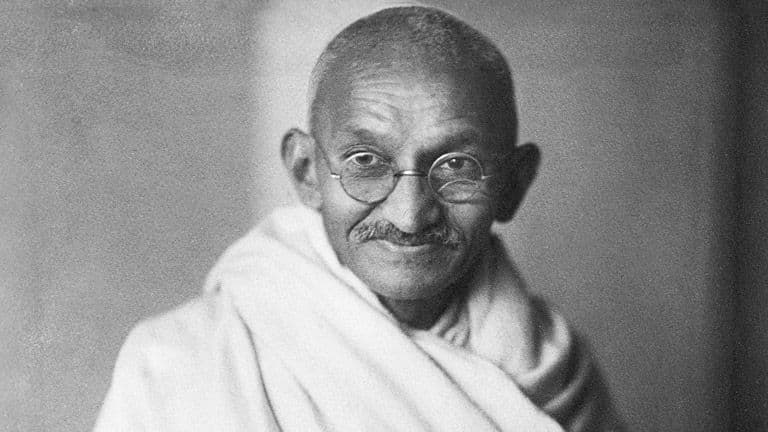
We share with you some extracts from a most interesting article by Dr María Teresa Román, lecturer in Eastern Philosophies at the UNED, on the concept of "ahimsâ", "non-violence". We have chosen the extracts relating to Buddhism, but you can find the whole article, which also sets out the view of this principle in Hinduism and Jainism, HERE. This age-old principle became especially well known around the world when Gandhi adopted it as the basis for "satiagraja", or peaceful protest.
«Whenever a boundary is established, the sense that human beings have of themselves is limited, diminished, becomes narrower and more restricted¹. First the environment, then the body, then the shadow or the unconscious, manifest themselves as what I am not, as alien and hostile elements² . Indeed, the cloud of dualism hangs over human life. For the eminent Indian thinker Jiddu Krishnamurti:
“The source of violence is the ‘I’, the ego, the self itself, which expresses itself in so many different ways—in division, in trying to become or to be someone—whereby it divides itself into the ‘me’ and the ‘not me’, as the unconscious and the conscious, the ‘me’ that identifies or does not identify, whether with the family or not with the family, with the community or not with the community, and so on. It is like a stone thrown into a lake: the ripples spread and spread, and at the centre is the ‘me’. As long as the ‘me’ survives in some form, whether very subtle or brutal, there will have to be violence”³ .
In every latitude, era and culture, violence has left an indelible mark, has permeated our identity and has shaped much of the history of humanity⁴:
“This world has suffered more pain and cruelty because we did what we believed was right than because we did what we knew was wrong. The pain inflicted on the world by criminals and bandits is far less than that which has its origin in the errors of people of good will. Religious wars were blessed by the Church. The tortures inflicted by those who administer justice were applied not only to criminals but also to witnesses, as a means of making them confess the truth. Child labour and slavery were considered just. Good citizens also consider wars to be natural and harmless institutions of civilised life”⁵.
Faced with the magnitude of the violence displayed by human beings over the centuries, some societies, such as India, have introduced into their cognitive-operational model a factor of respect for every kind of life: ahimsâ.
Ahimsâ is a Sanskrit term meaning “not wishing to kill”, “not doing harm”, “non-violence”. It is a fundamental concept in Jain ethics, occupies a very prominent place in Buddhism and is quite important in Hinduism.
BUDDHISM AND NON-VIOLENCE
Ahimsâ constitutes one of the main precepts of Buddhism. In numerous passages of the Pâli Canon (the canonical texts of Theravâda Buddhism), non-violence appears as the first rule that a Buddhist monk (bhikkhu) must observe. Thus the Dîgha-nikâya states: “How is the bhikkhu endowed with moral discipline? In this world, great king, having renounced the destruction of life, abstaining from the destruction of life, the bhikkhu, who has laid aside the cudgel, who has laid aside the sword, modest, kind, lives full of compassion and benevolence towards all beings”²⁵. And the first of the precepts set out in the Mahâvagga (I,56) is precisely “to abstain from destroying life”. Positively, this precept requires the cessation of all hostilities and a magnanimous and compassionate attitude towards every being.
In four of the eight factors that make up the Fourth Noble Truth, or the Noble Eightfold Path²⁶, there is an explicit recommendation not to harm or to renounce any kind of violence. Right thought explicitly says: “not to harm”. Also in right speech we read: “abstaining from speech that leads to resentment, hostility, enmity”. In right livelihood: “abstaining from trading in weapons, animals for slaughter”. And in right action we find the same instruction: “abstaining from killing”.
The Buddha made his opposition to animal sacrifice very clear. On this subject, the Blessed One tells the story of a powerful and happy sovereign:
“After having achieved great victories and conquered the whole earth, this king resolved to offer the gods a great sacrifice. He therefore summoned his chaplain and asked him about his intentions for carrying out his project. Before sacrificing, the priest advises him to first establish calm, well-being and security in his kingdom. Not that, after having cured all the ills of the country, he is about to sacrifice it. And in the sacrifice he does not destroy the life of any living being; he does not immolate oxen or rams, does not fell trees, does not raze the grass. The king’s servants lend their help to the sacrifice, but not out of subjection and in tears, nor for fear of their overseer’s stick: each one collaborates there willingly and is given full initiative. Offerings of milk, oil and honey are made, and in this way the king’s sacrifice reaches its end. But there is also, continues the Buddha, another sacrifice, easier to offer than that one and yet superior and filled with more blessings: it is when alms are distributed to devout monks, and when dwellings are built for the Buddha and his Community. There is yet a higher form of sacrifice: it is when, with a believing heart, one places one’s resources in the Buddha, the Law and his Community, when one no longer deprives any being of life, and when one refrains from lying and deceit. There is yet a higher form of sacrifice: it is when, having become a monk, one no longer knows joy or sorrow and sinks into holy stillness. But the highest sacrifice that a human being can offer, the highest grace that can be granted to him, is when he finally reaches Liberation and attains this certainty: I will not return to this world again. Therein lies the supreme completion of sacrifice. Thus speaks the Buddha: his sermon brings faith to the soul of the brahmin, who exclaims: “I place my resources in the Buddha, in the Law and in the Community.” (He himself had intended to offer a great sacrifice and had hundreds of animals set aside for this purpose): “These animals (he says), I untie them and let them go: may they find fresh grass to eat, may they find fresh water to drink, may cool breezes fan them!”²⁷.
Buddhism excludes sacrifice as the Brahmanical tradition understood it at the time of the Buddha Shâkyamuni. There are several explanations for this. Firstly, the gods are beings conditioned by karma²⁸. They play a secondary and lacklustre role, since they are not the architects of the universe, cannot alter the cosmic order, nor grant a person a good or bad rebirth and, even less, the attainment of liberation from the cycle of existences. So to whom can we offer sacrifices? In Buddhist doctrine, the human being is his own master, in the sense that there is nothing above him, no beings or powers on which he depends and which could judge or save him. In the words of the Buddha: “Work diligently for your own salvation!”²⁹.
Another explanation is that sacrifice involves the killing of animals, and this comes into collision with respect for every kind of life and departs entirely from the Buddhist ideal, whose first moral precept is precisely not to kill.
Lastly, sacrifice contributes to binding the one who performs it to the samsaric universe³⁰. Indeed, from the Buddhist perspective, every conscious and voluntary action generates results that the person involved will sooner or later have no choice but to bear, in one of their future existences. Good karma has results that give rise to good rebirths; conversely, bad karma gives rise to bad rebirths. The ritual act, which is karma par excellence according to the Brahmanical tradition, is subject to this principle:
“The one who has performed it may “eat its fruit” in a blessed later existence, in the form of a deity, for example. But, since the effect of a limited act is in turn limited, once that good karma is exhausted, it will be necessary for them to be reborn successively in other forms, in order to “eat the fruit” of all their other acts, whether they were performed in the present life or in previous lives. But liberation (moksha) consists precisely in leaving the cycle of rebirths in order to escape phenomenal existence, which is duhkha. And since karma is, so to speak, the engine of sâmsâra, it is necessary not only to stop producing more karma, but to exhaust all the karma accumulated previously, in order thus to obtain liberation, which cannot be acquired through sacrifice, which for this reason appears as illusory from the Buddhist perspective”³¹.
Ashoka, who reigned from 268-239 BC, was the third monarch of the Maurya dynasty³². His edicts and the inscriptions carved into rocks and pillars in various parts of his kingdom acquaint us not only with the personality of one of the most important rulers in Indian history, but also with the events of his reign. Perhaps the best known of these is his conversion to Buddhism. It took place after the famous Kalinga campaign. The destruction caused by the war filled the sovereign with remorse. In an effort to seek atonement, he became a zealous devotee of Buddhism. And to teach the people the new morality of tolerance, peace and non-violence, that is, the dharma, he had his edicts engraved on tall stone pillars distributed throughout the kingdom. In the third rock edict, among the moral precepts he extols is the abstention from killing living beings: “Respect for living beings is meritorious”³³. And in the first rock edict he orders that: “Formerly, in the kitchen of King Piyadasi, beloved of the gods, many hundreds of thousands of living beings were slaughtered every day for the preparation of meat curry. But now, since this edict of the Sacred Law has been engraved, only three living beings are slaughtered [...] And these three living beings will not be slaughtered in the future”³⁴. And in the thirteenth edict, Ashoka confesses the following: “Thus, however numerous the people who were killed, died or were taken captive in Kalinga, if even a hundredth or a thousandth part of them were to suffer the same today, this would be a painful thought for the beloved of the gods”³⁵.
Nevertheless, serious doubts have arisen as to whether Ashoka's policy was really so humane and generous. Thapar states that the great sovereign of the Maurya dynasty: “Recognised that there were occasions when violence might prove unavoidable, for example when the most primitive forest tribes caused disturbances. In a very poignant passage about the general suffering, both physical and mental, caused by war, he declares that, by adhering to the Dhamma, he will refrain from using force, but that, should it be necessary, he hopes that such conquest will be carried out with the utmost compassion and clemency”³⁶.
The position taken by ancient literature on the question of ahimsā has not changed at all from that held by modern Buddhist followers. Walpola Rahula, a scholar and Buddhist monk, states:
“Buddhism upholds and preaches non-violence and peace as its universal message, and does not approve of any kind of violence or destruction of life. According to Buddhism, no war can be called ‘just’, because this is merely a false term that has been coined and put into circulation to justify and excuse hatred, cruelty, violence and slaughter. Who decides what is just or unjust? The powerful and victorious are ‘just’; the weak and defeated are ‘unjust’. Our war is always ‘just’, but the war of others is always ‘unjust’. Buddhism does not accept this attitude”³⁷.
In the words of Tenzin Gyatso, the present Dalai Lama:
“According to Buddhist psychology, most of our problems are due to our burning desire and attachment to things that we consider lasting and which, in reality, are not. In the pursuit of the objects we desire, we make use of aggression and competitiveness as supposedly effective instruments. These mental processes, which have been developing in human beings since time immemorial, easily translate into actions that as a result produce a belligerent attitude, and under present conditions they prove more effective.
We should consider what we can do to control and regulate these “poisons” ―deceit, greed, aggression, etc.― since we know that they lie behind almost all the world's problems. Personally, and having been brought up in the Mahayana Buddhist tradition, I believe that love and compassion are the moral basis for peace in the world”³⁸».
Notes:
1 In Fromm's words: “Every society, through its own practice of life and its way of relating, feeling and perceiving, develops a system of categories that determines the forms of consciousness. This system functions, so to speak, as a socially conditioned filter; experience cannot enter consciousness unless it passes through this filter”. D.T. Suzuki and E. Fromm, Zen Buddhism and Psychoanalysis, Fondo de Cultura Económica, Madrid, 1975, p. 108. For Radhakrishnan: “the real danger lies not in the wicked, but in the ordinary, kind and diligent citizens who obey the laws and who, as members of a nation, become mad because their ideas of what is just and unjust have been deliberately and systematically perverted. The more deeply an abuse has penetrated a social system, the more difficult it becomes to make men aware of it.” Religion and Society, Sudamericana, Buenos Aries, 1955, pp. 297-298.
2 See K. Wilber, No Boundary, Kairós, Barcelona, 1985; The Spectrum of Consciousness, Kairós, Barcelona, 1990; After the Garden, Kairós, Barcelona, 1995; The Atman Project, Kairós, Barcelona, 1989.
3 J. Krishnamurti, Beyond Violence, Troquel, Buenos Aires, 1999, pp. 76-77.
4 “The twenty-first century begins with the air of war between nations and cultures, with xenophobia and racism, with terrorism, with religious intolerance, with serious environmental problems, with heavy clouds of political, economic and social uncertainty, with bitter outbursts from groups dissatisfied with the futility of the way of life, and with a long etcetera of problems”. M. T. Román, Eastern Wisdom of Antiquity, Alianza, Madrid, 2004, p. 284.
5 S. Radhakrishnan, op. cit., p. 297.
24 Mahatma Gandhi, Mi credo hinduista, Dédalo, Buenos Aires, 1986, p. 68.
25 Samaññaphalasutta 43. En la edición de C. Dragonetti, Dîgha Nikâya. Diálogos Mayores de Buda, Monte Ávila, Caracas, 1977, p. 171.
26 It consists of: right understanding, right thought, right speech, right action, right livelihood, right effort, right mindfulness and right concentration. See Sangharakshita, El sendero del Buda. Las ocho etapas de la liberación, Dharma, Novelda (Alicante), 1987; Bhikkhu Boddhi, La esencia del budismo. El noble sendero óctuple, Edaf, Madrid, 1992.
27 H. Oldenberg, Buda. Su vida su obra su comunidad, Aticus, Buenos Aires, 1946, pp. 178-179.
28 Karma is the action performed by the individual, and the fruit and consequence that inevitably follow from it: “Karman reigns from the summit of the universe, as absolute sovereign. Everything is subject to it, from the most insignificant beings up to the gods themselves. Nothing could limit or deflect its efficacy, neither prayers, nor sacrifices, nor the intervention of Visnú or of Siva in person”. M. Mourre, Religiones y filosofías de Asia, Zeus, Barcelona, 1962, p. 111.
29 Mahâ Parinibbâna Suttanta VI,7. En la edición de R.R. Ruy, El Libro de la Gran Extinción de Gotama el Buddha o sea el Maha Parinibbâna Suttanta del Dîgha-Nikâya, Hachette, Buenos Aires, 1975, p. 163.
30 “The theory of karman is closely linked to the belief in the transmigration of beings, that is, samsâra: the human being carries with them the consequences of their actions; life does not end with one existence, and passes from one to another, the kind of which is determined by the acts performed in the previous one. This chain of existences, subject without exception to the law of action and its consequent fruits, is called samsâra, the cycle of births and deaths”. M. T. Román, Enseñanzas espirituales de la India, Oberón, Madrid, 2001, p. 165.
31 P. Massein, “Sacrificio en el budismo”, en P. Poupard (dir.), Diccionario de las religiones, Herder, Barcelona, 1987, p. 1565.
32 “To reach the throne, Asoka murdered six of his brothers [...] Perhaps this fratricide is, however, a conscious invention, like the other crimes that Buddhist sources attribute to him, precisely to highlight to the maximum the difference between the wickedness he committed before his conversion and the good works he carried out afterwards [...] The atrocities are not few: when the women of his harem once told him he was ugly, he had five hundred of them burned, which earned him the name ‘the furious Asoka’ (Candâsoka)”. A.T. Embree and F. Wilhelm (eds.), India. Historia del subcontinente desde las culturas del Indo hasta el comienzo del dominio inglés (Historia Universal), Siglo XXI, vol. 17, Madrid, 1974, p. 76.
33 F. Rodríguez Adrados (ed.), Asoka. Edictos de la ley sagrada, EDHASA, Barcelona, 1987, p. 89.
34 Ibid., p. 87.
35 Ibid., p. 101.
36 R. Thapar, Historia de la India, Fondo de Cultura Económica, vol. I, México, 1969, p. 106.
37 W. Rahula, Lo que el Buddha enseñó, Kier, Buenos Aires, 1990, p. 115.
38 Tensin Giatso, Una aportación a la paz mundial, Dharma, Novelda (Alicante), 1987, p. 12.