Women in Buddhism
- 8 Feb 2026
- 17 min read
Beyond the clichés that shape our perception of Buddhism, once one begins to surface from this fascinating ancient tradition, certain questions naturally arise. For example, who was the Buddha, or what motivated him to set out on his path. And when one goes deeper, and if one is also interested in a feminist perspective, it is inevitable to wonder what role women have played and still play in Buddhism, since at first glance it seems there are only visible male teachers. And, why not, it is natural to ask whether the Buddha could have abandoned his wife, his son and his domestic responsibilities in pursuit of a spiritual truth had he been a woman.
An androcentric history of Buddhism
In this article I will try to distinguish two focuses: one will be the treatment and view of women throughout the history of Buddhism, and the other is the consideration of women within the body of Buddhist teachings. That is, I will attend to a contextual and historical register in relation to women, and to a philosophical register, in terms of views.
And since I distinguish two levels of reflection, this will also involve two claims: the first is that, considering the meaning, practice and aims of Buddhism, we can say that Buddhism is feminist. However, this claim coexists with a different social reality that obliges me to affirm that, at the same time, Buddhism is not misogynistic, but it has been androcentric and has developed within patriarchal structures. That said, I will try to defend why, following Rita Gross, ‘male systems of privilege and honour of a patriarchal and androcentric order are not Buddhist’ (Gross 2005: 122).
As there may be people here who are familiar with Buddhism but not with feminism, I will permit myself to clarify what these terms mean, since I will use them on several occasions. By misogyny we mean a view of women as inferior beings; it implies hostile treatment and consideration, as well as a strong feeling of aversion towards women. By patriarchy we mean the social relation of domination in which men hold a position of power and superiority over women. And, finally, androcentrism presupposes that man is the measure of all things; it is a form of thinking that places women within a scheme of ‘things’ defined by men (Gross 2005: 43), so that the subjective experience of women is always subsumed under that of men. So, to begin: what has happened to women throughout the history of Buddhism? I would love to say that, at last, I am going to speak of an exceptional history compared with that of humanity as a whole; that the Buddha's doctrine, since it shuns misogynistic considerations, has allowed women to be respected and to receive fair and equitable treatment. But no. Of course not. In the history of Buddhism, just as has happened with other traditions, women ‘have been locked in silence’ (Tsultrim Allione 2007).
Within the specialist literature on Buddhism, as well as in the genre of spiritual biographies, women have been a terra incognita (Gross 2005: 42), given the androcentric character of the Buddhist legacy. In fact, to date, the vast majority of historical accounts that reach us do so under the paradigm of androcentrism. And yes, why is it that we know so much about the experience of men in war and so little about the lived experience of women during those same events? Why do we know so many male artists and, yet, so few female artists? Why is our history full of great men who performed incredible deeds and, on the contrary, we know nothing of the women with whom they lived and shared their lives? This means that our view of the past, and therefore of the present and the opportunities it presents, is biased. History written from an androcentric perspective, by definition, cannot be correct, because it excludes half of the population from the experiences, testimonies and accounts that make up history with a small h.
Returning to Buddhism, many accounts survive that tell of the difficulties and feats of monks, lay people and yogis on the path to enlightenment, but the same kind of literature centred on women is far smaller. Yet androcentrism does not only mean that women's experience is brushed aside; when studying events involving women, historians and academics who point out the importance of some facts rather than others are also likely to do so through this lens. For example, the scholar Rita Gross is very critical of the fact that so much emphasis has been placed on the moment when the Buddha hesitated over whether to admit women into his monastic order, while the account of the Therigatha has been left out. The Therigatha is considered one of the earliest universal anthologies of women's literature, a collection of poems that gathers the achievements and realisations of precisely the first nuns who practised alongside the Buddha.
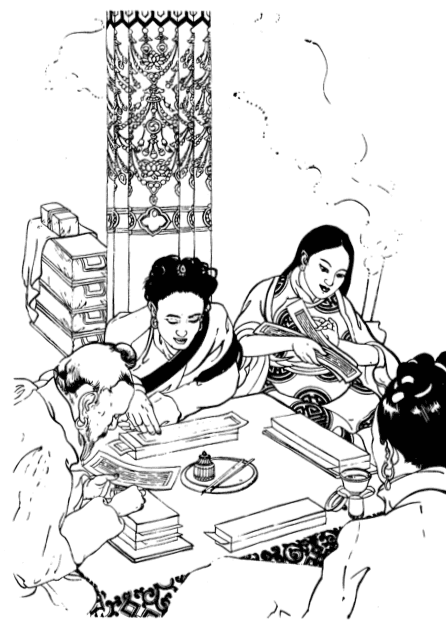
And you may ask: why was the Buddha reluctant to admit women into his order? The answer held by most academics is that ‘the social and cultural context of the time was not prepared to assume such a radical innovation, and life in the monastic order would become more complicated’ (Gross 2005: 62). However, this is also the only occasion recorded in all the literature of early Buddhism in which the Buddha, first reluctant to introduce such a novelty into his community, changes his position under the influence of his disciples. I will return to this change in his initial approach later on.
Yet it is true that, throughout the history of Buddhism, we find misogynistic texts that doubt women's ability to practise genuinely or to attain nirvana. These doubts are never voiced by the Buddha himself, however: there is not a single verse in the whole Pali canon or in the ancient literature in which the Buddha questions a woman's capacity to reach the final awakening (Gross 2005: 63). We also find texts, especially from Mahayana Buddhism onwards, that point to “the enormous difficulties a woman will face in attaining final awakening”, not because of any problem inherent in women, but because the conditions for them will always be much harder and more dangerous (Gross 2005: 106). The problem with this view is that it can lead to a kind of complacency, in which “poor women” must adapt to very hostile social conditions and no joint effort is made to combat them.
As Buddhism developed, and we now return to Mahayana, we find more and more texts stating that the Dharma, or awakening, is neither masculine nor feminine (Gross 2005: 116). This is because one of the central teachings of Mahayana Buddhism is the Madhyamaka view, which places emphasis on the concept of “emptiness”. “Sunyata” in Sanskrit, emptiness, means the non-substantial and non-essential nature of phenomena. Therefore, one is a man or a woman only in appearance. Thus, gender contains nothing fixed or inherent to the individual (Gross 2005: 110). In an emblematic Mahayana text known as the Vimalakirti Sutra, one of the female characters who appear proclaims that “the female form and innate characteristics neither exist nor do not exist” (Gross 2005: 115).
So much so that in China we find androgynous representations of Avalokiteshvara, the archetype of compassion, since it is considered that he is neither man nor woman, and will adopt whatever form is most effective for helping (Gross 2005: 121), be it male, female, or neither male nor female. But at the social level, lay practitioners and nuns played a very discreet role, and the support available to the female monastic community was always far inferior to that given to monks.
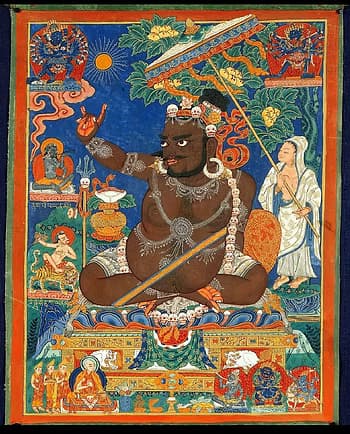
If we now turn to Vajrayana, or Tibetan Buddhism, which we historically place from the fifth century CE onwards and which represents a change of paradigm with respect to early Buddhism, as Mahayana did. Tantric or Vajrayana Buddhism points to “the sacred character of the world of phenomena” (…) which implies that “all human experiences and emotions are areas that can be worked with and transmuted” (Gross 2005: 124).
This branch of Buddhism is clearly more favourable towards women than earlier forms of Buddhism. Not only that, but Rita Gross dares to state that Vajrayana Buddhism, with regard to the subject at hand, “is among the most favourable found in the great religious traditions at any stage of their development” (Gross 2005: 125). However, this does not mean that the demeaning treatment or disregard of women has been overcome in this form of Buddhism: for example, Yeshe Tsogyal, Nangsa Obum, Lakshminkara and other historical heroines faced countless difficulties, at times attacks and abuse, simply for being women. Nor are the structures of power today much represented by women, and the system of reincarnation or tulkus (Gross 2005: 137), fundamental in this tradition, is suspiciously masculine. Even so, studies agree in pointing out that “Tibetan women enjoyed greater freedom and self-determination to take up an independent religious vocation” but, at the same time, “had many restrictions and closed doors before them”. (Gross 2005: 133).
At the doctrinal or philosophical level, the feminine principle is paramount, and the spiritual greatness of certain women, whether nuns or lay women, past or present, is greatly admired. For example, the figure of the yogini, who is neither nun nor lay person, takes on a very important role. Yoginis are often itinerant, travelling from place to place in areas such as Tibet or Nepal, sometimes alone, sometimes with other yoginis, or on other occasions with yogis, and they settle in isolated places to practise intensively for long periods. Although in some cases they do not have a great philosophical education, they are known for attaining advanced states of meditation, and for this reason many practitioners seek them out to become their meditation teachers (Gross 2005: 135).
But that is not all: Vajrayana Buddhism has certain doctrinal aspects which, if properly understood and practised, should entail an enormous and profound regard for women. Let us look at this: Sakya Pandita, one of the most important masters of Tibet and one of the founders of the Sakya school, in the eleventh century summarised the obligations of followers of the tantra in the form of 14 tantric vows, or samayas, which they were to observe. The samayas are by no means a mere formality; on the contrary, they carry enormous weight in Vajrayana Buddhism and must be taken into account as the axis of practice (Gross 2005: 154). And it says as follows:
If someone denigrates women who possess the nature of wisdom, they commit the fourteenth root downfall. That is, women are the symbol of wisdom and of sunyata, and they display both. It is therefore a serious fault to disparage women in any way possible, saying that they have no spiritual merit whatsoever and that they are made of unclean elements, without considering their good qualities. (Gross 2005: 154).
This vow means that under no circumstances should women be belittled, because they share the nature of wisdom and display wisdom and sunyata. Clearly, and following Gross, the fact that such an explicit vow had to be created shows that women were denigrated by some Buddhists and, at the same time, that contempt is an obstacle to spiritual development (Gross 2005: 154).
To understand this rather esoteric aspect, according to which woman "is of the nature of wisdom and displays wisdom and sunyata", some key concepts of Vajrayana Buddhism need to be introduced. This branch of Buddhism regards non-duality, or the coincidence of opposites, as a goal to be attained, a stage of complete spiritual realisation. Thus, the feminine and the masculine principles form a "unitary dyad", which is symbolised in iconographic representations by the sexual embrace of a man and a woman (Gross 2005: 157), but other pairs are also used, such as "the bell and the vajra, the left and the right, the sun and the moon, the vowels and the consonants, the red and the white" (Gross 2005: 157).
Thus, the feminine principle represents the all-encompassing space from which phenomena arise and manifest. Space is emptiness and, at the same time, wisdom, which is considered "feminine". This is the reason why many meditation practices point to the sacred and revered nature of the female sexual organs. The masculine principle is that which is contained by space, and it is activity and compassion. Hence, wisdom and compassion are inseparable in Vajrayana Buddhism because, following the Madhyamaka approach, "form is emptiness, and emptiness is also form" (Gross 2005: 158). It is essential to understand, however, that "they are not two separate entities nor do they constitute a single entity; they are a dyadic unity (…), both interpenetrate, are inseparable from each other and need each other" (Gross 2005: 157).
I would stress that this last idea is important, because a possible criticism of this view is to presuppose that the ideal of practice consists in emulating and developing the principle that best matches one's physiological sex: thus, women should cultivate and strengthen the feminine principle, and men the masculine. From this it would follow that women should cultivate quiet, still, more passive attitudes, and men, on the contrary, must always be busy saving the world and be less adaptable (Gross 2005: 160). Of course, this is a basic misunderstanding: no, students are encouraged to develop both wisdom and compassion, and that is why all Vajrayana practices involve an equal use of both principles and their representations.
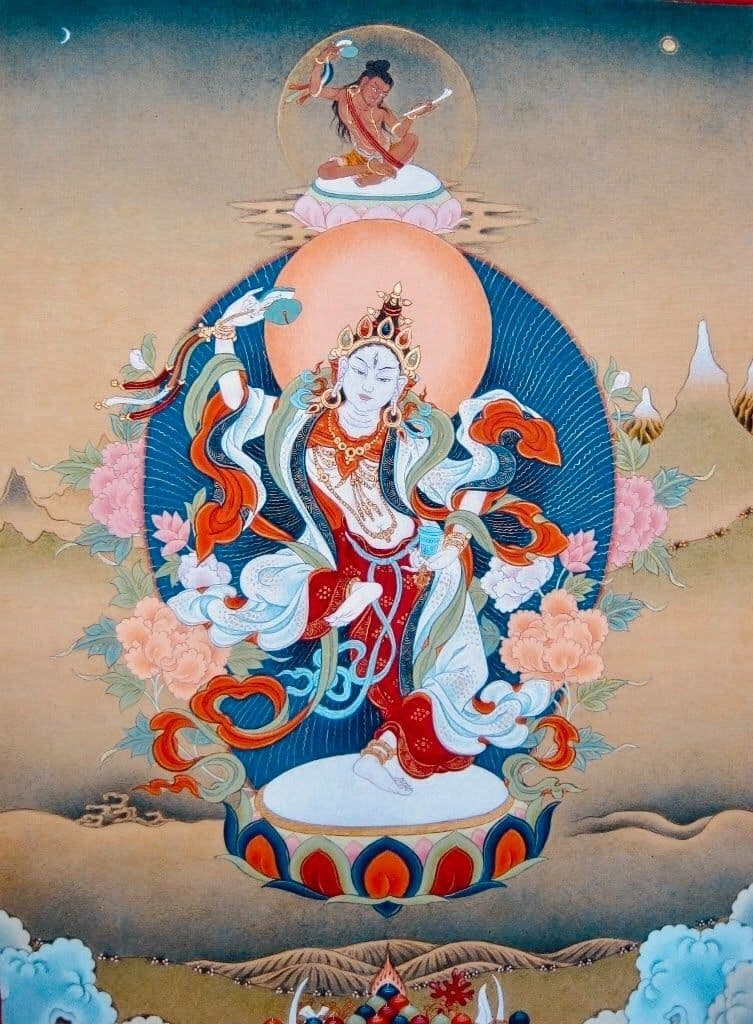
Finally, to close this review of Tantric Buddhism, another fundamental aspect is the figure of the dakini or khandro, which means "the one who dances in space". The dakini has four aspects: a secret one, which is "the manifestation of the fundamental aspects of phenomena and of the mind, the formless wisdom nature of the mind itself" (that is, the space and wisdom I have mentioned); another, inner aspect, which represents "the meditational deity that personifies the qualities of ultimate awakening"; an outer aspect, which represents "the energetic network of the mind embodied in the subtle channels and breath of Tantric yoga"; and the ultimate level, in which "any woman is a type of dakini" (Simmer-Brown 2007: 34).
Thus, having reviewed the historical forms that Buddhism has taken with regard to women, and following Rita Gross, we can reach three generalisations.
The first is that the role and representation of women has always been a matter of debate, and two positions have emerged from it. One of them is — and unfortunately it is the one we are very used to in many areas of our lives — a negative view of women. This view is expressed in misogynistic terms or else in terms of pity for a group that finds it so difficult to exist. The second position holds that women have exactly the same spiritual capacities as men, that gender is entirely irrelevant to spiritual attainment, and "that, for unusually motivated practitioners, femininity is an advantage" (Gross 2005: 176). It should be stressed that both views coexist and there is evidence of their existence in all forms and periods of Buddhism.
The second tendency that Gross points to, regarding "the roles and images of women", is that in the later forms of Buddhism the idea increasingly gains relevance that no form of discrimination against women should be practised and that gender is a category of no importance in spiritual life: that is, spiritual realisation does not depend on whether one is a man or a woman.
The last generalisation indicates that, although the historically dominant view has been that female birth represents a problem, it is in fact far more appropriate and coherent with Buddhist doctrine that gender should not be a determining factor for the practice of the Dharma (Gross 2005: 176).
I will finish by developing this last idea a little further. Buddhism, “although it has not considered in depth gender conventions as an aspect of the ego steeped in suffering” (Gross 2005: 196) – and that is truly rare coming from a tradition with a profound understanding of how identity is formed – shares feminist intersectionality's aim of liberating beings from suffering. This is because Buddhism starts from the recognition of the interdependent nature of reality and, for this reason, especially in the Mahayana and Vajrayana it is understood that full happiness cannot exist unless it passes through a commitment to the welfare of all beings, without exception. For this reason it can endorse Audre Lorde's statement that “there is no such thing as a single-issue struggle because we do not live single-issue lives”.
We cannot say that feminism is Buddhist, since it is a very diverse and plural movement, and not all feminists would agree with some of the Buddhist philosophical assumptions; but it is undeniable that, despite the differences that may exist, and as Gross says, there is a great deal of similarity between both views. For both “examine the way in which the ego's habitual patterns of behaviour pose an obstacle to basic well-being” (Gross 2005: 196). But in this sense, and given feminism's experience, baggage and commitment to addressing the different spheres of politics, economics and social organisation (Gross 2005: 200) and the various manifestations of suffering expressed there, present-day Buddhism has much to learn from feminism.
For its part, Buddhism can equip feminist activism with tools for learning to manage anger which, well used, is useful but not so corrosive or exhausting. Lastly, I believe it is important to reclaim what Gross says, namely that the Buddhist teachings on suffering can be a useful reminder that, ultimately, the suffering and anguish experienced by human beings will not be eliminated in a post-patriarchal society (Gross 2005: 199). It is also clear that, if Buddhism wants to remain faithful to its own vision, it must transcend patriarchal structures and androcentric bias (Gross 2005: 224).
Machismo and other forms of oppression are systemic. That is, they form part of the DNA of our social and political systems and, as the gregarious animals we are, also of our everyday practices and discourses. To think that the practice of the Dharma protects us from machismo and makes us, de facto, people who do not discriminate is dangerous. To reduce everything to emptiness or ultimate reality is to forget relative reality and the suffering of beings. In this case, of all who suffer some form of oppression. Like all important things, the gender perspective is not only thought about or discussed; it is practised, and it must also be applied in Buddhism. But this is not something that should frighten any Buddhist practitioner. The Buddha himself reconsidered his position and agreed to modify the structure of his order. Indeed, the Dharma basically consists in shaking up our presuppositions and assumptions, and uprooting everything that does not serve a compassionate and wise purpose. So yes, these are times for spirituality to be feminist.
Bibliography used:
Gross, Rita (2005). El budismo después del patriarcado. Trotta: Barcelona.
Simmer-Brown, Judith (2007). El cálido aliento de la dakini. MTM Editores: Barcelona.
Tsultrim Alione (2007). Mujeres de sabiduría. La Liebre de Marzo: Barcelona