Pema Chödron and bell hooks on cultivating openness when life falls apart
- 7 Feb 2026
- 20 min read
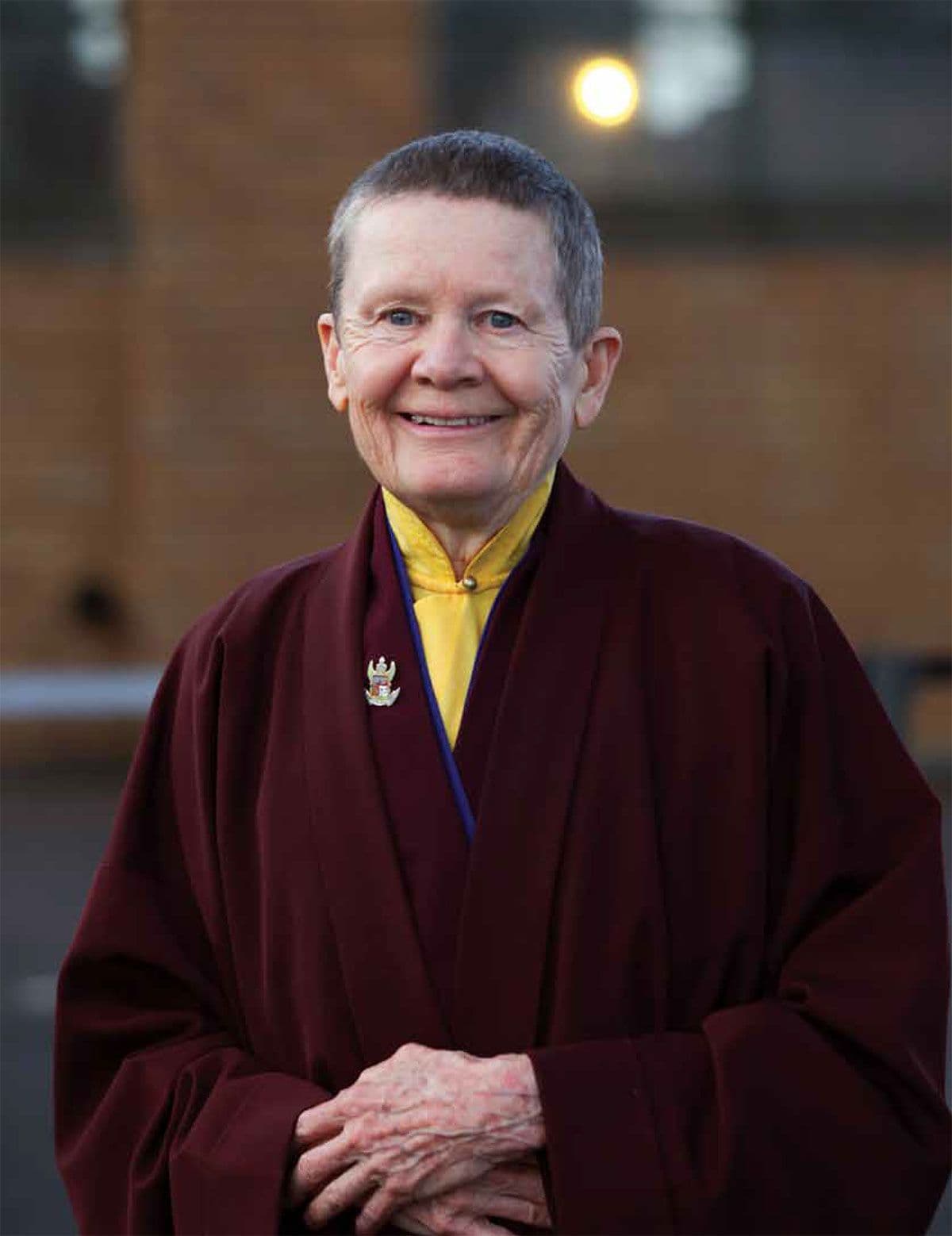
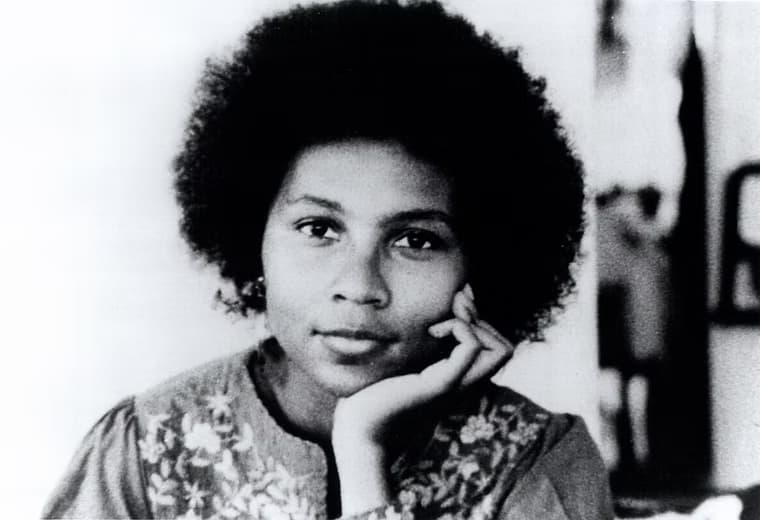
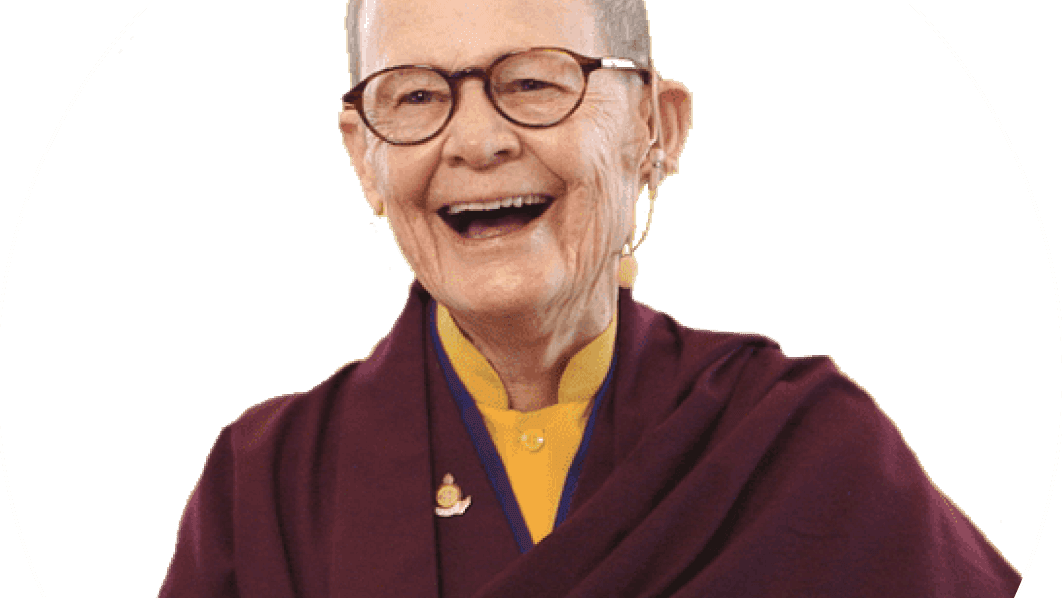
In this conversation from 1997, bell hooks talks with Pema Chödrön about how to open our hearts to the most difficult challenges of this life.
“At the start, when I walk into the classroom, I tell my students that we are there to think critically, to engage fully and deeply, and with all our hearts, with the world of ideas we live in. The work of Pema Chödrön gives me this gift. It constantly encourages me to think beyond the places where I have built boundaries, where I have allowed myself to get stuck, to cling and to fill myself with defences.
When I first read her work, the writing irritated me. I was annoyed by what I began to call her “strategic breadth”. I wanted solutions to be offered to me, ways out. On the contrary, she kept extending an invitation to me and to everyone to move into that magical space beyond good and evil, to travel to the heart of compassion. When you have taken a leap of faith, straight to the heart of the problem, loving-kindness seems less of a utopia. It becomes something concrete: a place to practise wherever you are. Beyond the challenges she poses, leading us towards those places where we have shut ourselves in, Pema is most seductive and exciting when she urges us to revise our notions of security. She says: “Real security is your willingness not to run away from yourself.” She encourages us to take risks, to embrace rebellion, disruption and chaos as a beloved space for transformation. Talking with her allowed me to open up about things that clouded my heart. My hope was that she could and would clarify them. Those sequences of light are here in our conversation. May her radiance reach you.”—bell hooks
bell hooks: Pema, one of the ideas in your work that really challenges me is giving up the hope of reaping the fruits. This is very difficult for me.
Pema Chödrön: The way I understand it is that we deprive ourselves of being in the present, always thinking the reward will come to us in the future. The only place to work is in the now. We work with the situation presented to us rather than some hypothetical possibility of what might be. I like any teaching that encourages us to be with ourselves and our situation just as it is, without seeking alternatives. The source of all enlightenment, the source of all goodness and compassion, the source of all wisdom, is in every second. Anything that makes us look forward is meaningless.
bell hooks: A large part of my work revolves around racism and sexism, and on the one hand I want to start right where I am, in the now. But on the other hand, I need a vision of the future in which they no longer exist. Do you think that is too utopian?
Pema Chödrön: Personally, I work with aspiration. The classic aspiration is: “Sentient beings are infinite. I commit myself to saving them.” This means I aspire to end the suffering of all beings, but at the same time I abide in the immediacy of the situation I find myself in. I let go of the hope that something will change and the fear that it won't. We can long to end suffering, but somehow it paralyses us if we are too goal-oriented. Do you see the balance? It is like the teaching Don Juan gave Carlos Castaneda when he said: “Do everything with all your heart, as if nothing else mattered. You do it impeccably and with all your heart, but at the same time you know it doesn't matter at all.”
bell hooks: Even so, it is very difficult for people to fight racism and sexism without hope that it will end. There is so much suffering and apathy because of the feeling that we have fought and fought and things have not changed enough.
Pema Chödrön: The main problem is aggression. Normally, if there is a lot of hope, one starts to cultivate a strong sense of enmity. So the whole process of trying to relieve suffering actually brings even more suffering, because of the aggression towards the oppressor. Don't you see many people with very good intentions who start to feel a great deal of anger, depression and resentment?
bell hooks: Yes, you're speaking to one of those people. I feel so overwhelmed sometimes.
Pema Chödrön: Well, isn't that getting in the way?
bell hooks: Yes, it gets in the way. I am on tour right now talking about my book on how to end racism, and I hear people saying things like “racism doesn't exist” or “don't you think we've dealt with that already?” And I start to feel irritated. This irritation grows inside me, and I notice how it collapses into pain. The other day I got home, sat down at the table and simply cried because it was too much.
Pema Chödrön: Well, isn't that the point? That other people and ourselves are really the same, and we get stuck in different ways. Getting stuck in any kind of tension between self and other seems to cause pain. So if you can keep your heart and mind open to these people, in other words, work with any tension in order to move closer to them, isn't that how the system of racism and cruelty begins to wear away?
“The source of all enlightenment, the source of all goodness and compassion, the source of all wisdom, is in every second. Anything that makes us look forward is meaningless.”
The thing is, once we start this kind of work, we open ourselves to all our unresolved miseries beginning to surface and blocking our compassion. It is a difficult and challenging practice to keep the heart and mind open. It takes a lot of work to become a living example of an impartial mind! But when you see, bell, how you feel towards these people, you can begin to understand why racism exists, why cruelty exists: because everyone has the same thoughts and emotions as you. Everyone feels that irritability and then things escalate.
bell hooks: Is opening the heart simply a choice of the will?
Pema Chödron: I think it begins with the aspiration to connect with an open heart, knowing that cultivating openness is how you want to spend the last moments of your life.
Openness begins to emerge when you see how you close yourself off. You see how you close up, how you shout at someone, and you start to feel a little compassion. It begins with compassion for yourself, and then you start to extend that warmth towards the rest of humanity. You start to wonder how people can shout at others because they are Asian or Black or Latin American or women or gay or whatever it may be. You begin to understand what it is like to be in their situation.
bell hooks: How do you develop compassion for yourself?
Pema Chödron: To a large extent, compassion means being honest with yourself, not shielding yourself from your mistakes as if nothing had happened. And the other major component is being kind.
This is what meditation is about, but obviously it goes beyond sitting on a cushion. You begin to see your moods, your attitudes and opinions. You start to hear this voice, your voice, and see how it can become so critical of yourself and of others. A clarity emerges about the different parts that make you up.
Meditation offers the tools to see all of this clearly, with a neutral approach. Having compassion for yourself means staying with the first thought or the first sensation. That is to say, when you see yourself being aggressive, or stuck in self-pity, or whatever it may be, you practise again and again not adding anything to it – guilt, self-justification or any other negative element. You work at not disconnecting and at being kinder to the human condition as you see it in yourself.
bell hooks: The idea in your work that I find very moving is unconditional embrace of oneself, which allows us to embrace others at the same time. But if I unconditionally accept myself, what is the motivation to keep practising?
Pema Chödron: That willingness to stay with yourself is just another way of saying that you remain conscious. It seems that one of the causes of not seeing things as they really are is our tendency to belittle ourselves, to dissociate continually and to keep editing. When you do not close up or disconnect, you begin to perceive. This perception is the wisdom that completely cuts through the conventional way we have of seeing.
When you see clearly, the motivation to practise grows stronger and stronger because you begin to have reflections that are utterly refreshing and powerful. The motivation to practise becomes stronger because you are discovering your own nature, and it is painful to block the process in any way. It is painful to see yourself as completely neurotic, selfish, all these things, and you cannot bear to do that to yourself. You no longer want to cover up your openness. Besides, you cannot bear to see the suffering it causes others when they do the same.
On one level, our suffering is caused by bigotry and dogmatism and all these things, but ultimately we suffer because we do not understand how limitless we are. We could say that we live in a fantasy; what we call reality is, in truth, a dream. This is an important truth: that all of this is a fantasy and that we are completely trapped in it. We limit what is limitless, we condition what is unconditional, and that makes us feel miserable. When you begin to understand this, you cannot bear to see others continuing to harm themselves in this way, and you cannot bear to continue harming yourself in that way either. So you are genuinely motivated to practise.
bell hooks: You have said that we cannot smooth out the rough edges; yet as I listened to you, I thought: isn't she describing a sense that the rough edges do soften?
Pema Chödron: The truth is no. What you realise is that there is enough space to accommodate everything. There is enough space in your own being, enough space in all of creation to accommodate everything. All of it. It is because we choose and select that we suffer, because we have biases and prejudices, because we prefer the smooth to the rough and then react for and against.
“To a large extent, compassion means being honest with yourself, not shielding yourself from your mistakes as if nothing had happened.”
bell hooks: Could you talk about the difference between guilt and responsibility? Because I feel, as you do, that guilt is not very useful. But you have said, for example, in reference to teachers who abuse their power, that the question of responsibility is real. How can one manoeuvre between letting go of guilt and being able to embrace the idea of responsibility?
Pema Chödron: This is the message of the first noble truth: you are able to see suffering as suffering.
Obviously, the less entangled you are in your hopes and fears, the more capacity you will have to observe suffering very directly and without aggression. Responsibility seems to mean that you can be honest, incredibly honest. You see that harm is being done. You see that someone is harming a child, an animal, another human being. You see it clearly, and your greatest wish is to reduce that suffering. So the question becomes how to proceed so that the person you see as the problem takes responsibility and is willing to acknowledge what they are doing.
You realise how difficult it is for you to acknowledge what you are doing in your own life. You see what it takes to be responsible for yourself, and you begin to look for skilful means to communicate in a way that breaks down barriers rather than reinforcing them. It all comes down to communication: how can you communicate so that the other person can hear what you are saying, and you can also hear what they are saying?
bell hooks: One of the questions that has come up with my students in my American literature classes is the idea that we are all responsible. That although I, as the teacher, am a kind of centre from which things radiate, we are all responsible. Last week they were very upset because I said: "Do you know what? These assignments are very boring." And they came back this week and told me: "You were really mean, you were very blunt." And I said: "Sorry, was I the only one who thought these assignments were boring? Am I the only person who has to take responsibility here?"
Although I did not have the pleasure and the pain of knowing Trungpa Rinpoche, his teachings have always moved me. I have always felt that he embodied, in my teaching and in my life habits, a wild spirit that is experimental and wants to push boundaries. That is why my book on teaching is called Teaching to Transgress.
Pema Chödron: Responsibility, since you bring it up, is my understanding of the spiritual path. With Trungpa Rinpoche, my feeling was that everything he did was to get people to take responsibility for themselves, to help them mature. He was a master of non-conformity. Talking with him was like speaking into a vast space where everything came back to you, and you had to be responsible for yourself.
Personally, I think the role of the teacher is to wean students off dependence and off adopting a view of life based on the father-child dichotomy. That is what I understand as non-theism. Theism is not only about God; it is about always feeling that you are incomplete and that you need something or someone outside to look to. It is like never growing up.
For me, theism is feeling that you cannot discover the truth for yourself. You choose Buddhist teachings, or any teaching, and you try to fit yourself into them. But you are not really finding anything out. You are not wrestling with them. You are not going deeply into them, letting them transform your being. You are simply trying to live according to some ideal. You keep looking for the security of having someone to praise or to blame.
So responsibility is quite groundless. There is no hand to hold. It is like the lojong slogan that says: "Of the two judges, trust the principal one." It does not matter what others say; in the end, you are the only one who can answer your own questions.
bell hooks: You have taken radically different paths at different moments in your life. I am interested in how we can use mindfulness as a tool to uncover our vocation, to know when we should leave one path and move on to another. Do you still have to deal with these kinds of questions?
Pema Chödron: Oh, all the time. I mean, isn't this the path? The further you go into it, the more things you have to face. Life is a wonder. It always makes you more humble by showing you how little you know, how little you understand. It inspires you to keep going forward, and wow, it is an experience that makes you more humble. I don't know whether this is what you meant here.
bell hooks: It is part of what I was getting at, but I was asking more specifically how we can practise in a way that illuminates our everyday decisions.
Pema Chödron: What do you think, bell?
bell hooks: I was thinking about work in America and work as a locus of suffering for so many people. So many people spend their lives working in places where they feel miserable. I am certainly one of those people who feels miserable in her own work.
Pema Chödron: Well, there is always the easy answer of changing jobs. There is nothing wrong with that. But changing the external situation alone will not address the root of discontent, which brings us back to the truth of suffering. As human beings, we need to look directly at suffering, at its causes, at what makes it escalate and at what allows it to dissolve. So the first step is to recognise, with great honesty and heart, that wherever we go or whatever we do, there will always be positive and negative feelings, and so it will be a fertile situation.
My own experience is that I have been a nun for about twenty-three years now, and over the years my life has become simpler and clearer in some ways. But, you know, bell, these feelings of worry, of not having enough time, still come up. Then you realise how much of all this is in our minds. Whether we are in an overwhelming work situation or a very simple one, we still have to work with our minds.
That is why some teachings say that no matter what is happening in your life, it is always teaching you the true nature of reality. It does not matter what film you are in, it does not matter what plot the film you are starring in has; it is the vehicle for showing you the true nature of your mind.
So I think it all comes down to being very, very attuned to our own emotions, to being able to see how we cling to what is pleasant and feel aversion to what is painful. You work on it again and again, trying to discover how to let go, to open up and relax instead of tightening and closing down. It is a matter of recognising the wisdom and compassion contained in this life we have, just as it is. No matter how simple or complicated life becomes, it can make us feel miserable or it can wake us up.
Life is a marvel. It always makes you more humble, showing you how little you know, how little you understand.
bell hooks: One of the things I have been thinking about a lot is poverty. I am fairly convinced that our society has made poor people feel that they cannot lead a meaningful life. A great deal of the turmoil in the lives of poor people in our society has to do with this contempt.
Pema Chödron: The question is how to help people, however desperate their lives may be, to realise that they are worthy of living on this earth, that they do not have to feel inferior or ashamed of themselves. And the question is how to help people become more intelligent about what makes suffering increase and what makes it decrease.
There is a famous saying that from great suffering comes great compassion. Well, from great suffering can arise great compassion, or from great suffering can arise great hatred. Perhaps someone like you could really work on this message. From great suffering can arise a great opening of the heart, a great sense of brotherhood with others, or from great suffering can arise hatred, resentment and despair.
bell hooks: But it is not automatic. It is not that because you suffer you will have compassion. In the past, people have felt that having compassion is a kind of reward for your suffering.
Pema Chödron: People need a great deal of support for suffering to be transformed into compassion. What usually happens to people when they have no teachers, guides and the support of people who care is that great suffering leads to more suffering. You have mothers who have no money to look after their children and on top of that lose themselves completely in drugs, not to mention that their children get into serious trouble. So the nightmare grows and grows.
The fundamental question is not whether or not there is suffering. It is how we work with suffering so that it leads us to awaken the heart and to go beyond the habitual views and actions that perpetuate suffering. How do we really use suffering so that it transforms our being and that of those we come into contact with? How can we stop running away from pain and reacting against it in ways that destroy both ourselves and others? This is a message people can hear, but they need to hear it many times, and from people who genuinely care, not from someone who is just passing through to make a few dollars.
That is why I love the teachings of lojong, because the lojong slogans are accessible. Basically, they show how we can take difficult circumstances and transform them into the path of compassion. That is the kind of teaching we need today: that difficult circumstances can be the path to liberation. It is news that can be put to use.
bell hooks: Well, this brings me to the last point. I have written it in large capital letters: “DO NOT THINK FOR A MOMENT THAT YOU WILL NOT DIE”.
Pema Chödron: Yes. “Do not think for a moment that you will not die”. Dzongsar Khyentse Rinpoche said this to a friend of mine who had cancer and was close to death and found it hard to accept. And rather than seeming cruel to her, she found it an immense kindness that someone was telling her the truth.
bell hooks: It seems that much of our desire to escape has to do with the feeling that the closer I am to suffering, the closer I am to death.
Pema Chödron: For me, the spiritual path has always been learning to die. That means not only death at the end of this particular life, but all the falling apart that happens continually. The fear of death – which is also the fear of groundlessness, of insecurity, of not having everything under control – seems to be the most fundamental thing we have to work with. Because these endings happen all the time. Things always end; they arise and they end. But we are strangely conditioned to feel that we are supposed to experience only the part of birth and not the part of death.
We are so afraid of not being in control, of not being able to hold on to things. Yet the true nature of things is that you never have control. You never have control. You can never hold on to anything. That is the nature of things. But it is almost as if it were in human beings' genes not to be able to accept it. You can accept it intellectually, but in the moment you live it, it produces a great deal of panic and fear. So my own path has been training to relax with groundlessness and the panic that accompanies it. Training to allow all of that to be there, training to die continually. That seems to be the essence of the teachings of lojong: remaining in the space of uncertainty without trying to rebuild a point of reference.
We can stop searching for an idealised moment in which everything is simple and safe. That second of experience, which may be painful or pleasant, is our basis to work with. What makes the difference is how we relate to it.