

Passing through death: a ritual for the deceased and teachings on the Tibetan Book of the Dead
- 1 Nov 2026
- 4 h
What it involves
The Changchok ritual
In Vajrayana Buddhism, death is not understood as an end but as a transition —a bardo— in which the mind passes through different phases. The tradition distinguishes several moments within that interval: the very instant of dying, the experience of the ultimate nature of mind that manifests just afterwards, and the period that follows, in which consciousness moves towards a new birth. How those phases are crossed depends, to a large extent, on the state of mind in which we reach them.
Within this framework, the Changchok ritual is a ritual of purification and offering dedicated to those who have died. It is not a farewell rite in the conventional sense: its purpose is to act directly on that passage, helping to dissolve the karmic weight the deceased person did not manage to resolve in life and creating the conditions for their mind to cross the bardo with less confusion and less suffering.
The structure of the ritual combines purification and the generation of merit. Mantras are recited and offerings are made in the name of the deceased; that merit is dedicated explicitly to their benefit, with the intention of lightening the obstacles they carry and favouring a fortunate rebirth, or even liberation. It is not a symbolic gesture added to grief, but a practice the tradition considers effective in itself, whether or not those who receive it can take part in it consciously.
The changchok also has an effect on those who practise it and on those who are grieving. It offers a concrete channel for loss: instead of remaining in suffering, the community does something active for the person who has died. That double direction —towards the one who has gone and towards those who remain— is part of why the ritual is held in community and not as an individual act.
The passage after death: Lama Norbu’s teachings on the Tibetan Book of the Dead
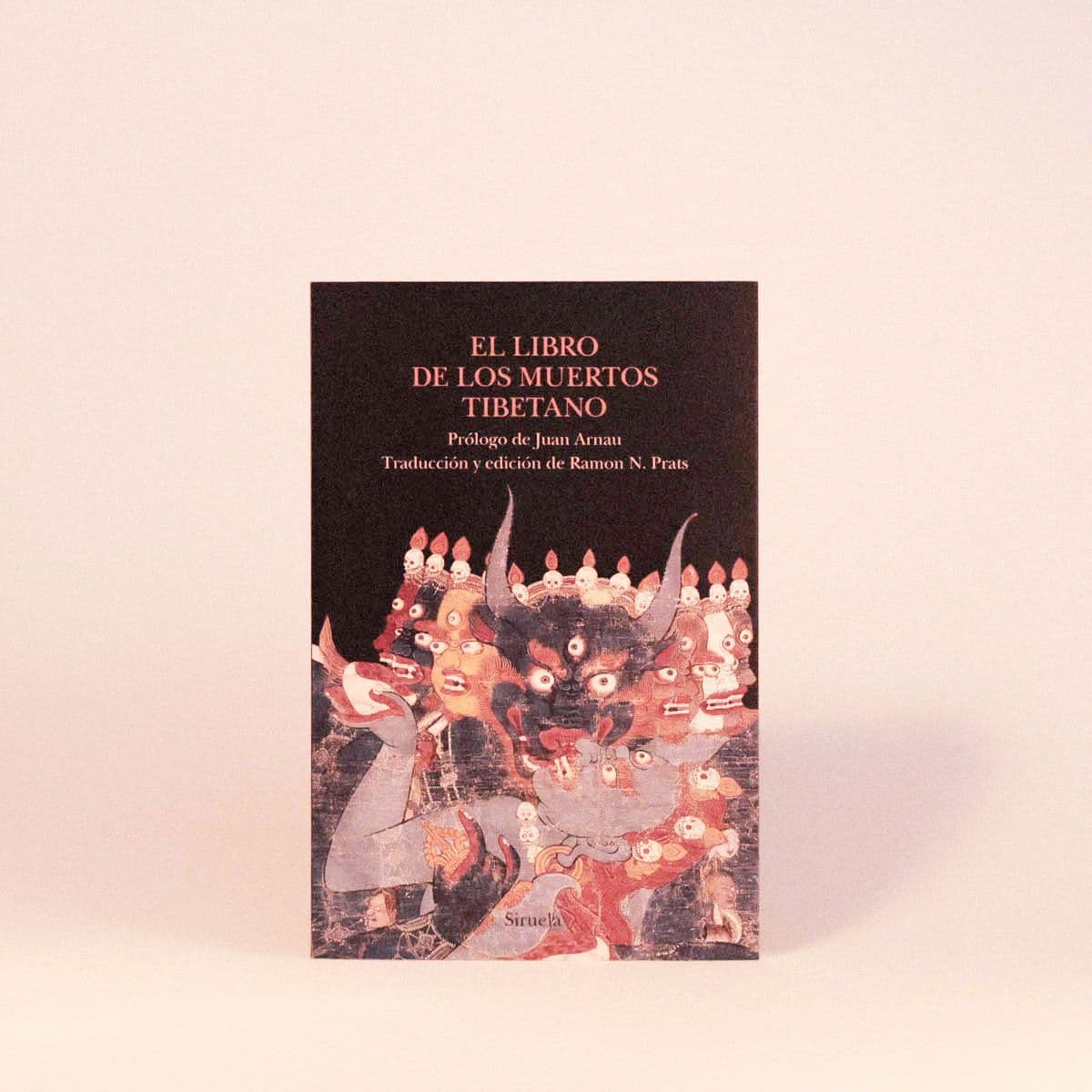
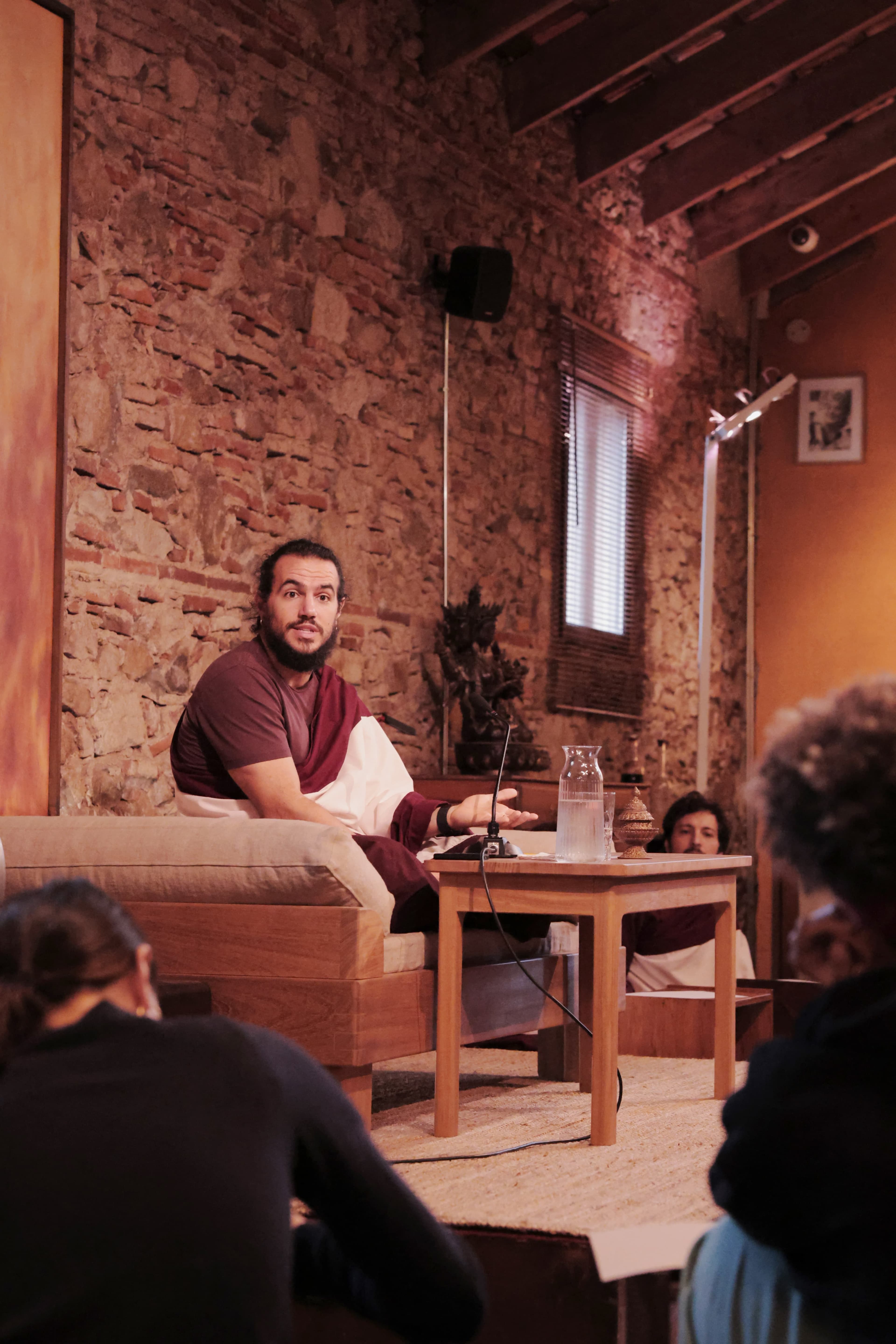
After the ritual, Lama Norbu will give teachings on the bardo based on the Tibetan Book of the Dead (Bardo Thödol), the intermediate state between life and death. It is the central teaching of the Bardo Thödol, the Tibetan Book of the Dead, a text of the terma tradition attributed to Guru Rinpoche and revealed centuries later by the tertön Karma Lingpa.
Understanding the bardo also helps us understand the phases body and mind go through as physical manifestation dissolves: according to the tradition, the process of dying itself has a recognisable structure, which precedes the visions the text describes —peaceful and wrathful, manifesting according to each person’s karma— and the successive opportunities to recognise the nature of mind, and be liberated in that recognition, or to continue towards a new birth.
Because of that precision, the Bardo Thödol has also become a reference outside strictly Buddhist circles: it is used in end-of-life accompaniment and, increasingly, in palliative care units, as a source of ancestral wisdom that describes in detail one of the most significant moments of a person’s life. We know the stages of giving birth, but we rarely know the stages a dying person passes through in death. The Bardo Thödol, however, is a clear guide for that moment.
Lama Norbu will help us understand better what the bardo is and how it can orient us in an end-of-life process.
“When a vulture has finished feeding on a corpse, it leaves it and flies away. In the same way, when the time comes, your mind, once it has finished with this life, will leave your corpse behind and enter the bardo.” — Dilgo Khyentse Rinpoche
Teachers
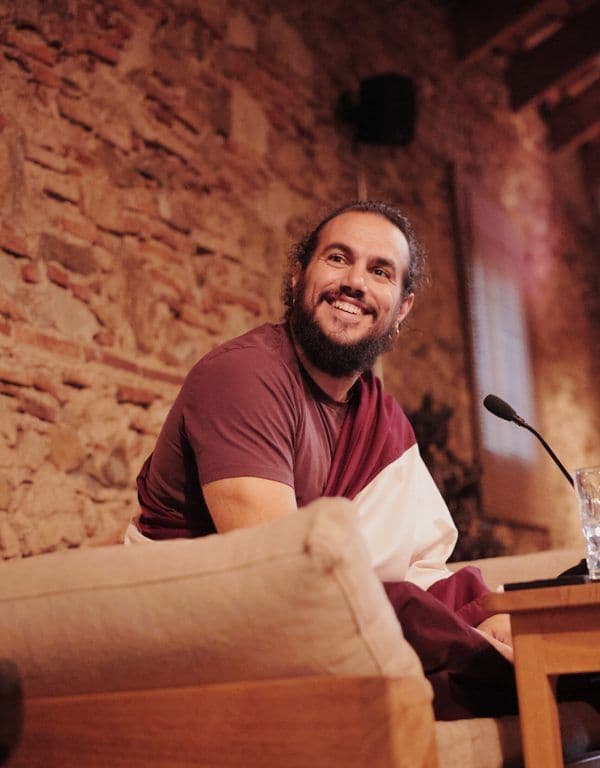
Resident teacher
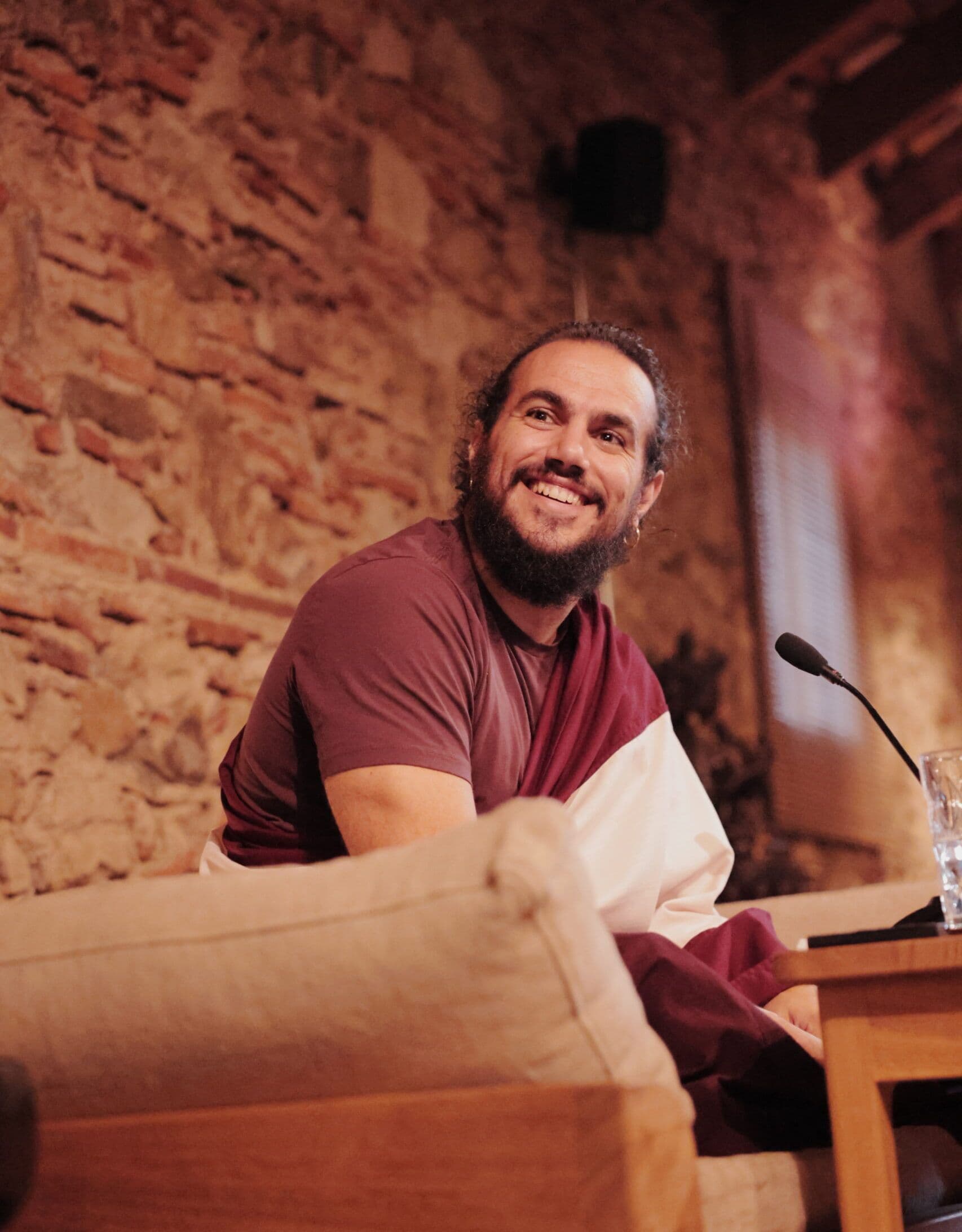
Lama Ngawang Norbu
Lama Norbu is a teacher of Vajrayana Buddhism with wide experience in guiding retreats, study groups and meditation practice. Trained in a living lineage of transmission, he combines the depth of the traditional teachings with a warm and clear approach, helping wisdom and compassion find practical expression in daily life. He was named “lama” by His Holiness Gongma Trichen Rinpoche in 2020.
Who it is for
People interested in the Buddhist view of death and, specifically, that of the Vajrayana tradition.
People interested in the practice of Vajrayana rituals.
People who have lived through the death of someone close in recent months and want to approach it from a contemplative and spiritual perspective.
Gallery
Programme
Sunday · 1 November
- 16:30Changchok ritual (about 2 hours)
- 19:00Teachings on the bardo, online and in person (about 1 hour 30 minutes)
Book your spot here
Frequently asked questions
Do I have to be a Buddhist to take part in this ritual?Show answer
No, but some previous knowledge of Buddhism is advisable, since these are not introductory teachings. Lama Norbu’s teachings will take rebirth as the basis for the explanation. You can watch these teachings in which Lama Norbu spoke about the subject.
Can I take part in the ritual online?Show answer
No. As it is a Vajrayana ritual, it is not possible to take part online, only in person.
Can I watch the teachings later?Show answer
No, on this occasion there will be no recording to watch later.
How do I include those who have died in the ritual?Show answer
Anyone who wishes can send the names of relatives or loved ones who have died (pets included) so that they are included in the ritual, through the activity’s registration form.
Can I include anyone who has died in the ritual?Show answer
Yes, anyone who has died, whether recently or long ago. If you already included them in a Changchok ritual, there is no need to do so again.
Can I include animals that have died in the ritual?Show answer
Yes, you can.
Do I have to make a donation for you to include a loved one in the ritual?Show answer
No, it is not essential. If your financial circumstances do not allow you to make a donation now, that is fine. You can also make one later if you would feel more comfortable, but it is not essential. Making a donation is recommended because of the karmic connection it creates, but we will never check whether we have received a donation before including someone in the ritual.
How does the contribution work?Show answer
These teachings are offered in the spirit of dāna, the practice of conscious giving. This means we do not set a fixed price; instead, we invite each person to contribute according to their means, thereby covering the running costs and the continuity of spaces like this one.
We understand dāna as a gesture of shared responsibility: what we receive —teachings, accompaniment, structure— is only possible because there are people who support it materially. Your contribution, whether larger or smaller, is a way of valuing and caring for the project and of allowing others, perhaps with fewer resources, to access the teachings too. We encourage you to take a moment to sense what you would like to offer and are able to, from gratitude and honesty.
If right now you need to offer a different amount, within or outside these ranges, you are very welcome to do so. What matters is that your donation comes from freedom. Thank you so much for your support!
Do I need to turn my camera on if I follow the teachings online?Show answer
We ask everyone taking part live online to turn their camera on during the session.