The Feminine Principle in Tibetan Buddhism - The Dakini
- 25 Jan 2026
- 7 min read
In Tibetan Buddhism, the figure of the dakini is of great importance. It is not merely a symbolic image, a feminine deity or an inspiring figure within the tantric imagery. In its essential aspect, the dakini represents the nature of formless wisdom, the awakened energy that appears to point directly to reality as it is.
In Vajrayana Buddhism, dakinis hold a central place as expressions of the feminine principle of wisdom. Their presence can be understood on many levels: as a spiritual manifestation, as a teacher, as a protector, as an inner inspiration for the practitioner, or as a symbol of dynamic emptiness. Ultimately, all women may be perceived as some kind of manifestation of the dakini, not in a merely idealised sense, but as a living expression of a wisdom that cannot be confined to fixed concepts.
What dakini means in Tibetan Buddhism
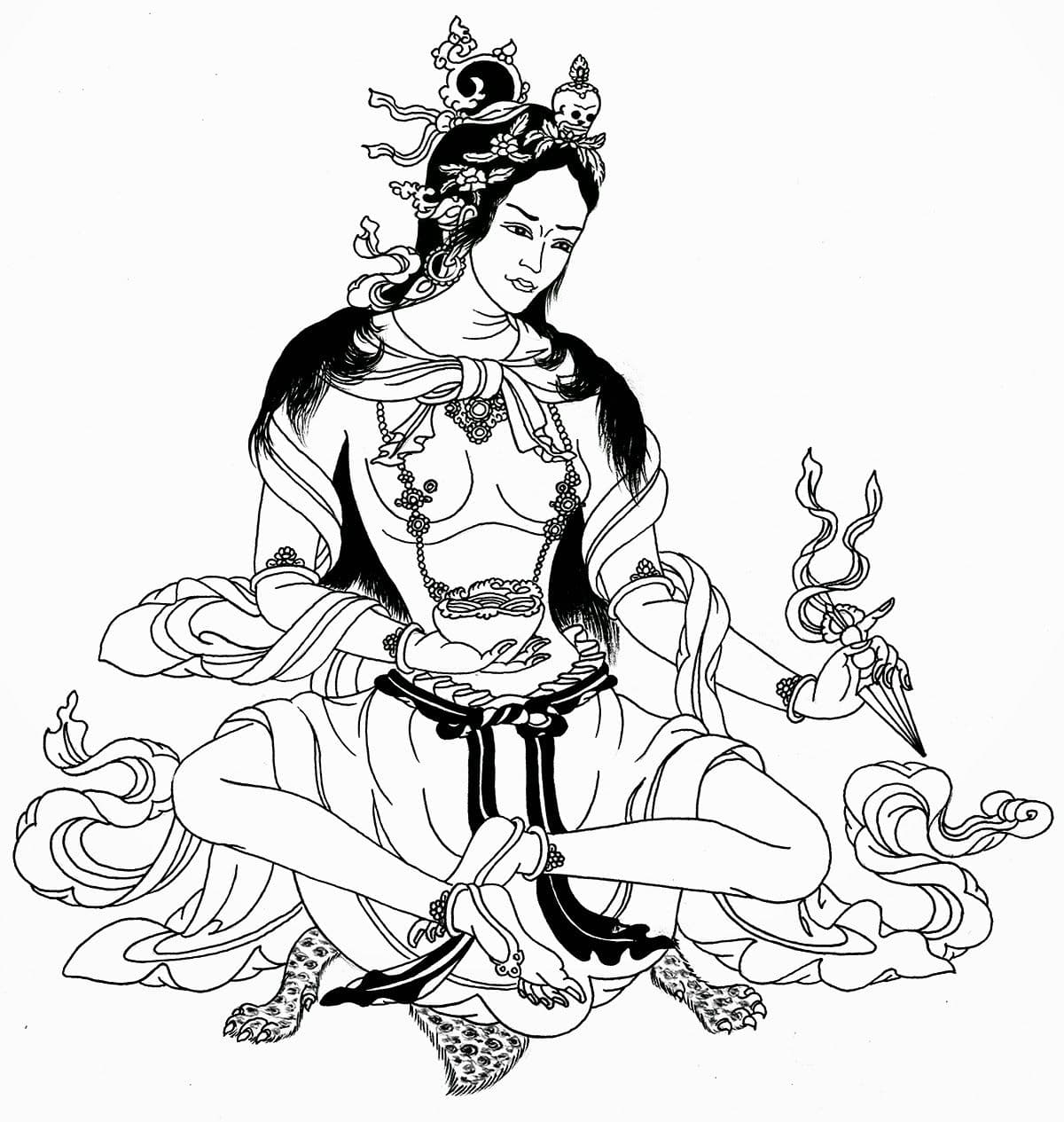
The Sanskrit word dakini is usually translated into Tibetan as Khandroma, a term often interpreted as "the sky dancer" or "she who moves in space". This translation should not be understood only in a poetic sense. The "sky" or "space" it refers to is not simply the outer firmament, but the open expanse of emptiness: the boundless nature of the mind and of all phenomena.
The dakini is, therefore, a figure who moves freely in that space. She is not confined by rigid forms, fixed ideas or the conceptual structures that tend to enclose our experience. Her dance represents the freedom of awakened wisdom, a wisdom that does not oppose the world, but appears precisely in the midst of it.
For this reason, in the Vajrayana tradition, the dakini is not only "someone" who is invoked or represented in ritual images. She can also be understood as an inner experience: the awakening of a direct, penetrating and transformative clarity that helps the practitioner recognise the nature of the mind.
The dakini as the feminine principle of wisdom
To speak of the dakini is to speak of the feminine principle in Tibetan Buddhism. But this feminine principle should not be reduced to a biological or cultural question. In the tantric context, the feminine is associated with wisdom, direct intuition, emptiness and the capacity to reveal what is real without detours.
The dakini embodies a form of knowing that does not depend solely on intellectual analysis. Her wisdom is immediate, alive, at times even uncomfortable, because it cuts through the illusions and self-justifications of the ego. In many Vajrayana teachings, the dakini appears as one who awakens, shakes, inspires and confronts. Her presence may be sweet or fierce, peaceful or wrathful, visible or inner, but it always points towards liberation.
This dimension explains why dakinis are so important in tantric practice. They do not represent a passive, decorative or secondary femininity, but an awakened, active and transformative energy. They are symbols of wisdom that moves, that dances, that crosses boundaries and that accompanies the practitioner on the path towards realisation.
The Warm Breath of the Dakini
To understand this figure better, we reproduce a passage from the book El cálido aliento de la dakini (Mtm editores), an excellent work by Judith Simmer-Brown in which she sets out, with academic rigour and deep knowledge of the subject, what the dakini represents and means in Vajrayana Buddhism.
«The usual translation of the Sanskrit dakini is Khandroma, which means "the sky dancer".
"Kha" refers to space or sky, the infinite expanse of emptiness that is the basis of all experience; it does not reside anywhere, yet it continually appears in the practitioner's experience, as an emblem of space.
"dro" indicates movement and life itself. Emptiness is not mere void, but a mode of being in which manifestation arises freely, without ever compromising the power of emptiness. In the case of the dakini, manifestation helps the practitioner, for it indicates the dynamic of the emptiness of phenomena, through its very being (dro).
The dakini represents the inner experience of space, which is the inspiring impulse at the heart of enlightenment.
"ma", the feminine ending, suggests that she is the one who dances in the boundless nature of the sky, for as a feminine form she possesses a unique ability to point to emptiness directly».
This passage clearly shows that the dakini cannot be understood solely as an external figure. Its meaning points to a very profound experience: the union of emptiness and manifestation, of space and movement, of wisdom and life. The dakini does not dwell in a place separate from the world; she appears in the practitioner's own experience, as a reminder that reality is open, dynamic and free.
The dance of emptiness
One of the most beautiful aspects of the dakini is precisely her relationship with dance. The image of the "sky dancer" expresses a central teaching of Buddhism: emptiness does not mean absence, nihilism or disconnection. Emptiness is openness, possibility, interdependence. Nothing exists in a fixed or isolated way, and precisely for that reason everything can be transformed.
The dakini dances in that space because she is not caught in appearances. Her movement symbolises the freedom of one who recognises that phenomena arise and vanish without possessing a solid identity. This understanding does not lead to indifference, but to a more lucid and compassionate way of being in the world.
In this sense, the dakini teaches that wisdom is not something rigid or abstract. Wisdom moves. It appears in intuition, in the body, in our relationships with others, in moments of rupture, in crises and also in beauty. Her dance is the expression of a mind that has ceased to cling and, for that reason, can respond with greater freedom.
The dakini as guide, protector and inspiration
In Tibetan Buddhism, dakinis can also appear as guides and protectors of the spiritual path. At times they are presented as human teachers; at others, as visionary or symbolic figures within meditation practice. In every case, their function is to help the practitioner awaken.
The dakini can inspire, protect, point out mistakes or cut through deeply rooted mental patterns. That is why her energy is not always represented as gentle or accommodating. In Tibetan art, some dakinis appear with fierce expressions, surrounded by fire or in dynamic postures. This iconography should not be read as ordinary violence, but as the force of wisdom that destroys ignorance.
Her wrathful aspect expresses intense compassion. The dakini does not destroy the being, but what prevents us from recognising the awakened nature of the mind: attachment, confusion, fear, self-deception and conceptual rigidity.
The day of the dakinis in the Tibetan calendar
On the 25th day of the Tibetan lunar calendar, the day of the dakinis is celebrated. In many Vajrayana traditions, the 25th day of each lunar month is especially dedicated to the dakinis and to the feminine principle of wisdom. It is considered an auspicious day for practice, devotion, offerings and remembering the enlightened feminine energy.
On this day, practitioners may perform prayers, offerings, merit-accumulation practices or meditations linked to the dakinis. It is also a time to remember the importance of gratitude: gratitude towards teachers, protectors, mothers, spiritual companions and wise women who have sustained our path, directly or indirectly.
Beyond the ritual dimension, the day of the dakinis can be lived as an invitation to recognise that awakened wisdom in everyday life. The dakini does not belong only to texts, thangkas or altars. She can also appear in a word that wakes us up, in a presence that protects us, in a teaching that makes us uncomfortable or in an experience that obliges us to look more deeply.
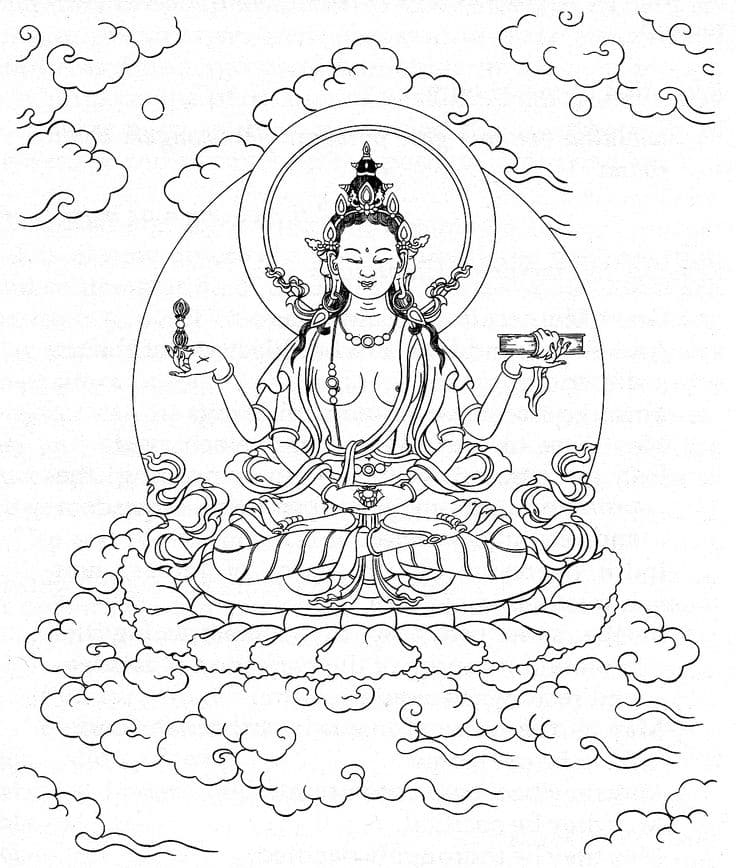
In the image, the "secret dakini" or the Great Mother Prajñaparamita, the essence of the practitioner's mind-wisdom.