The First and Second Noble Truths of the Buddha
- 19 Oct 2025
- 5 min read
The First Turning of the Wheel of the Dharma
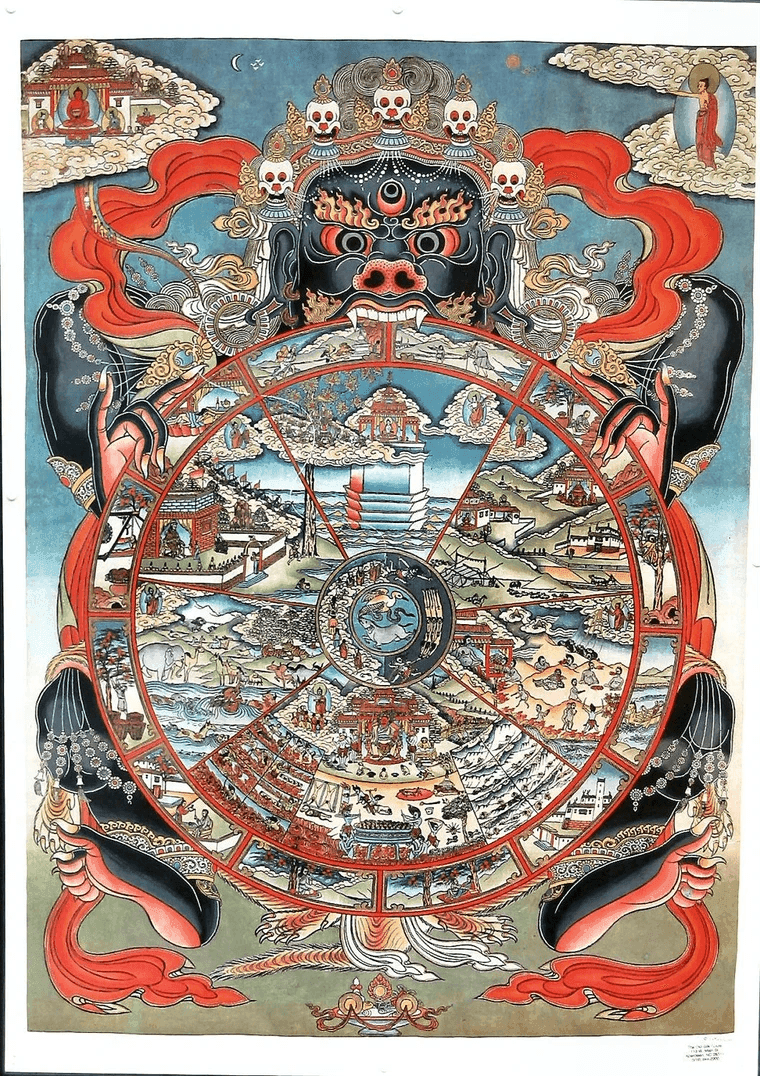
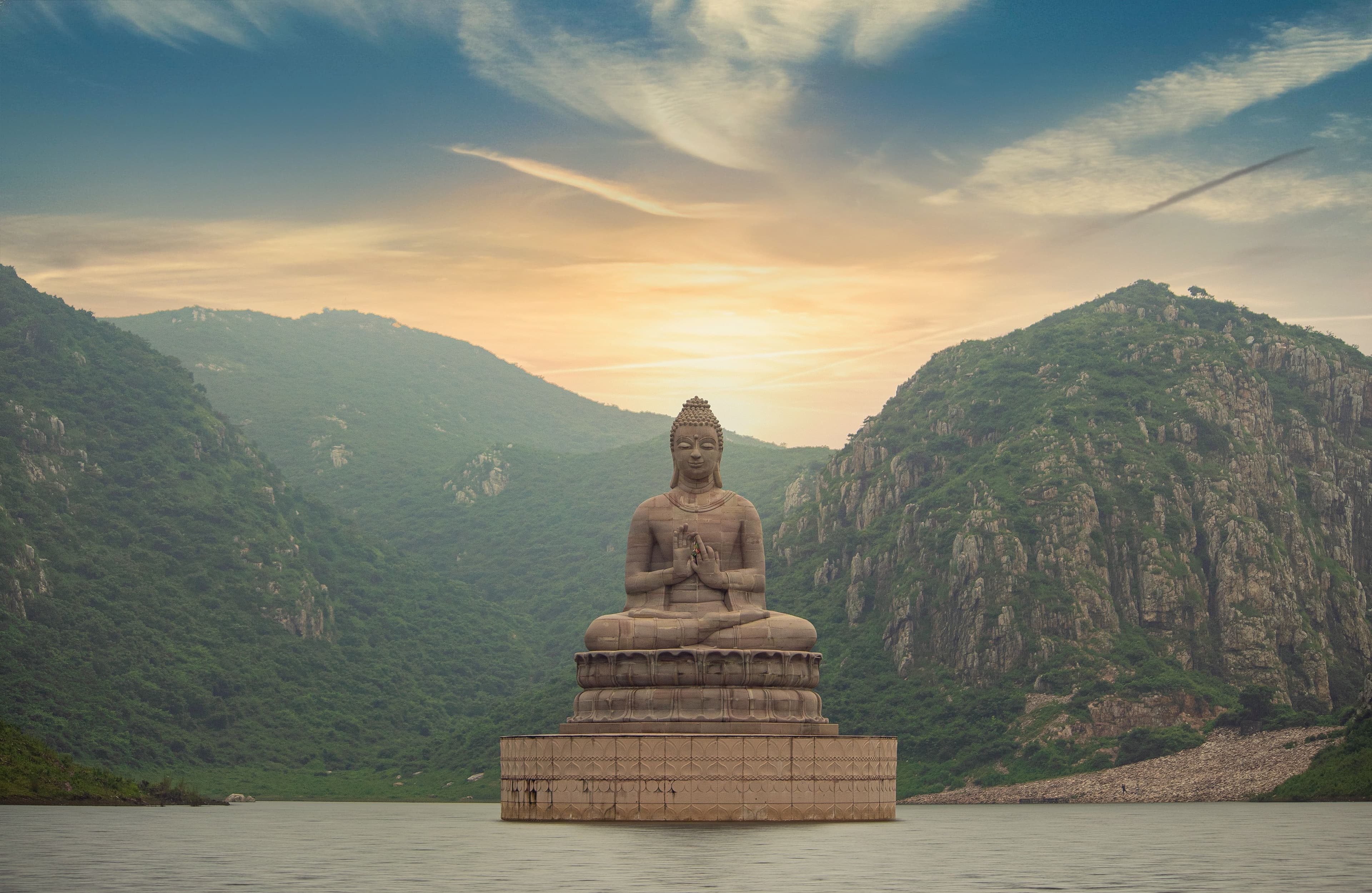
It is near Varanasi, in Sarnath, that the Buddha teaches The Four Noble Truths to his former companions in ascetic practice. It is the first time the awakened one shares his experience. He explains one of the foundations of Buddhism: the middle way, the path to follow between the extremes of sensuality and mortification if one aims to attain liberation. To explain it, scholars suggest that the teaching follows the formula of a traditional medical scheme of the time (diagnosis, aetiology, prognosis and prescription), and indeed one of the Buddha's most fortunate epithets was that of "master of remedies" or "surgeon who removes the arrow of desire". First, it is stated that everything is suffering or unsatisfactoriness (dukkha); second, it states that dukkha, or the sickness, has a cause (samudaya), which is attachment or excessive desire, and that, third, this cause can be removed (nirodha) through, finally, the application of the antidote (magga): the path of the eight divisions.
"This, monks, is the Noble Truth of Suffering. Birth is suffering, ageing is suffering, sickness is suffering, death is suffering, association with the unpleasant is suffering, separation from the pleasant is suffering, not obtaining what one desires is suffering. In brief, the five aggregates of clinging are suffering.
The backbone of the first noble truth is the concept of unsatisfactoriness or suffering, but it is important to understand that this idea does not deny that pleasures or satisfying moments occur in the world; rather, since everything is impermanent (anitya), any experience can turn into its opposite: "all accumulations lead to ruin / Everything that rises will fall / Unions end in separation / Life has death as its end". The lack of understanding of the concept of unsatisfactoriness, which is central to Buddhist philosophy, has led many superficial readers to mistakenly consider the Buddha's proposal nihilistic.
In reality, the fundamental idea is that, on noting the transitoriness of phenomena, their changing element—and therefore their non-substantial nature, empty of inherent existence, sunyata—there is no sense in clinging to that which never remains as it is. Everything is in continual flux and for that reason reality is unsatisfactory. It is, in short, and as Bhikkhu Bodhi explains, a "basic unsatisfactoriness that runs through our lives". While it is true that on some occasions this unsatisfactoriness breaks out in the form of despair, depression or hopelessness, dukkha is that subtle murmur we cannot silence, which never stops reminding us that things will never be as we expected them to be.
As for the second noble truth, "samudaya", which sets out the cause of suffering, certain nuances should also be made. A common criticism of Buddhism is that its proposal implies renouncing desire. In this sense, the texts of early Buddhism leave little room for interpretation: "Pleasure is brief as a lightning flash / [...] Why, then, should I desire the pleasures you speak of? / [...] I seek the highest prize, hard for men to attain: / The true and lasting wisdom of the wise". Or, for example, when the Buddha finally attained enlightenment, the texts record that he said: "O housebuilder, you have been found / you will never again build a house for me! [...] My mind has passed into the stillness of Nibbana / The extinction of desire has at last been attained!". Theravada Buddhism, more oriented towards restraint, would also be in line with this approach: the practitioner must renounce desire and suppress natural impulses.
Yet in later forms of Buddhism the emphasis lies less on desire itself being the origin of suffering than on attachment to desire or on excessive desire for things. Indeed, if in order to reach an end, liberation, desire must be suppressed, one enters a contradictory logic in which the path to follow is, at the same time, a trap for the path itself.
What must be emphasised, regardless of whether we adopt the Theravada or the Mahayana nuance, is that the second Noble Truth (samudaya) points to the origin of unsatisfactoriness lying within ourselves. The manifestation of that unsatisfactoriness or sickness are the kleshas, or obscurations, which in their most fundamental aspect appear as greed, aversion and delusion. From these other afflicted states derive and, the ensemble of all of them, awaken all the emanations of dukkha, "such as pain, suffering, fear and the senseless cycle of birth and death". As Bhikkhu Bodhi explains, eradicating unsatisfactoriness involves a methodical process, a long path that does not depend merely on willpower alone, but on a guided investigation, for the root of all afflictions is ignorance (avijja):
(...) As the basic root of dukkha, ignorance is a fundamental darkness that envelops the mind. (...) The breeding ground of dukkha is the ignorance that emanates in the defilements, the defilements that give rise to suffering. As long as this causal matrix remains, we are not yet beyond danger.
This entry is part of a series of instalments presenting some of the final coursework of students on the Casa Virupa meditation course.
Bibliography:
Bhikkhu Bodhi (1999) The Noble Eightfold Path. The way to the end of suffering. Buddhist Publication Society. Available online: http://www.buddhanet.net/pdf_file/noble8path6.pdf
CANTO-SPERBER, M. (coord). ET AL. Dicctionaire d’éthique et de philosophie morale (2001). PUF: Paris.
COOMARASWAMY, A. Buddha and the Gospel of Buddhism (1989). Editorial Paidós: Barcelona