The four foundations of mindfulness according to Bhikkhu Bodhi
- 22 Nov 2025
- 13 min read
The most detailed teaching on the Buddha's practice of mindfulness can be found in the famous Satipatthana Sutta, “The Discourse on the Foundations of Mindfulness”. The Buddha opens this discourse by declaring that the four foundations of mindfulness are the “direct path” to overcoming suffering and attaining nirvana. The expression “four foundations of mindfulness” refers to the conscious contemplation of four objective domains which, taken together, constitute the complete field of human experience: the body, feelings, mental states and dhammas, a term he left untranslated.
With regard to each of the contemplations, the text tells us that the practitioner remains “ardent, clearly comprehending and mindful, having put away covetousness and grief for the world”. These terms indicate that the practice involves not only mindfulness but also the union of mindfulness, energy and discernment, together with detachment from worldly concerns.
Of the four applications of mindfulness, the contemplation of the body focuses on the material side of existence, the two in the middle on the mental side and the last on the exploration of existence, in forms that reflect the aim of the teaching. The four are developed in a definite sequence that begins with the body as the coarsest and culminates in the last, the most subtle.
The first foundation of mindfulness: Contemplation of the body
The contemplation of the body (kayanupassana) is said to comprise fourteen exercises, but since the last nine are mere variations of one and the same principle, these are essentially reduced to six.
The first is mindfulness of breathing. This was the object of meditation that the Buddha himself used on the night of his enlightenment, and throughout his career as a teacher he praised it as “a state of unadulterated joy that dispels unwholesome thoughts as soon as they arise”.
To carry out this practice, one observes the natural process of breathing under the lens of mindfulness. Breathing naturally through the nostrils, we focus on the breath at the point around them or on the upper lip, where one can notice the air moving in and out. The Buddha expressed the key to this practice succinctly: “Simply, with mindfulness one breathes in, with mindfulness one breathes out”. Awareness of the breath cuts through the complexities of discursive thought, draws us out of mental scattering and securely anchors the mind in the present.
According to the sutta, mindfulness of breathing develops in four stages. In the first two stages, one simply observes the in-breath and the out-breath by their duration, noticing whether they are long or short. In the third stage, together with the in-breath and the out-breath, one experiences the body in its entirety. And in the fourth stage, one “calms the bodily formation”: the breath and other bodily functions gradually relax until they become extremely subtle.
The next practice in the contemplation of the body is mindfulness of postures, which extends attention to all of them: walking, standing, sitting and lying down, as well as the change from one posture to another. When walking, we know that we are walking; when standing, that we are standing; when sitting, that we are sitting; and when lying down, that we are lying down. The contemplation of postures illuminates the impersonal nature of the body, showing it as a configuration of living matter that is subject to the direct influence of volition.
The following exercise, called mindfulness and clear comprehension, applies mindfulness to the various activities of everyday life. In carrying out any action, we know exactly what we are doing and why we are doing it. In this way, ordinary actions such as leaving home and returning, looking ahead and to the sides, bending and stretching the limbs, dressing, eating, drinking, urinating, defecating, sleeping, waking, speaking and remaining silent all become part of the process of meditative cultivation. Everyday life itself becomes a well-defined practice, and practice becomes fully integrated into everyday life.
The next two exercises in mindfulness of the body are analytical contemplations on the true nature of the body. The first is the meditation on the unattractiveness of the body, which is proposed as a direct antidote to lust. The Buddha teaches that lust arises and proliferates through perceiving the body as sensually attractive. To counteract lust, we observe deeply the anatomical make-up of the body, dissecting the body – our own body – into its components in order to highlight its unattractive nature. The text mentions thirty-two parts of the body, including various organs, tissues and bodily fluids. When these are observed with the eye of meditative vision, the body's pleasing appearance dissolves, and sensual lust, without any point of support, withers away.
The other analytical contemplation is the meditation on the four physical elements. This aims to counteract our innate tendency to identify with the body by exposing its impersonal nature. In this practice, we mentally dissect the body into its four primary elements, referred to as earth, water, fire and wind, which represent the four properties of solidity, fluidity, heat and motion. Having analysed the body into its four elements, all the elements are then considered to be essentially identical with their external counterparts. This shows that the body is nothing more than a particular constellation of changing material processes, without any substantial basis for the notions of “I” and “mine”.
The last exercise of mindfulness of the body is a series of nine contemplations on the charnel ground, meditations on the disintegration of the body after death. It can be practised by imagining it or with the help of photographs. One forms a clear mental image of a body decomposing in nine stages, and then applies the process of putrefaction to one's own body, reflecting thus: “This body too is subject to the same fate. In time, it too will decompose.” The aim, however, is not to foster a morbid fascination with death and corpses, but to loosen our instinctive clinging to the body by exposing its inexorable impermanence.
The second foundation of mindfulness: Contemplation of feelings
The next foundation of mindfulness is the contemplation of feelings (vedananupassana). The word “feeling” here does not refer to emotion, but to the simple affective tone of experience, whether pleasant, painful or neutral.
Feeling is of special importance as an object of contemplation because it serves as nourishment for our latent obscurations. Pleasant feelings feed greed and attachment, painful ones give rise to aversion, and neutral feelings sustain delusion, manifesting as apathy and complacency.
However, the connection between feelings and obscurations is not inevitable, and it can be severed by bringing the feelings that arise into the field of mindfulness. When a feeling is turned into an object of mindfulness, it is disarmed and no longer triggers a non-virtuous response, but appears as a mere impersonal factor of experience.
In the early stages of the contemplation of feelings, one simply observes the distinct qualities of feelings as pleasant, painful or neutral. One observes the feeling as a mere mental event from which all subjective references have been shorn, all references to a “self” that experiences the feeling. As practice advances, one distinguishes whether the feeling is worldly and tends toward attachment, or spiritual, tending thus toward detachment. In time, the focus of attention shifts from the tone of feelings to the very process of feeling, which shows itself as an incessant flow of feelings arising and dissolving, one after another, without pause. This marks the beginning of understanding impermanence, which, as it progresses, dissolves greed for pleasant feelings, aversion to painful feelings and delusion about neutral feelings.
The third foundation of mindfulness: Contemplation of mind
The third foundation of mindfulness is the contemplation of mind (cittanupassana), which in fact means the observation of mental states. Since the mind is, in itself, the bare awareness of an object, mental states can only be distinguished through their associated factors, which give them their distinctive colouring.
In this contemplation, the Buddha mentions sixteen mental states grouped in eight pairs: the mind with lust and the mind without lust; with aversion and without aversion; with delusion and without delusion; the constricted mind and the distracted mind; the developed mind and the undeveloped mind; the surpassable mind and the unsurpassable mind; the concentrated mind and the unconcentrated mind; and the liberated mind and the bound mind.
For practical reasons, at the beginning it is sufficient to focus on the first six states, observing whether the mind is associated with any of the three impure roots or is free of them. When a particular mental state is present, it is simply perceived as a mental state, not identified with “I” or “mine”. Whether it is a pure state or an impure state, a lofty state or a low one, there should be neither elation nor dejection, only a clear recognition of the state, without clinging to the desirable or being disturbed by the undesirable. As we deepen the contemplation, the apparently solid, stable mind reveals itself as a flow of mental acts that appear and disappear, that neither come nor go anywhere, in a sequential continuum without pause.
The fourth foundation of mindfulness: contemplation of dhammas
The final foundation of mindfulness is the contemplation of dhammas (dhammanupassana). The word “dhammas” here refers to groups of phenomena organised in ways that reflect the aim of the Buddha's teaching. The five groups mentioned in the sutta are: the five hindrances, the five skandhas (the five aggregates), the six pairs of sense bases, the seven factors of awakening and the four noble truths.
The five hindrances constitute the obstacles to realisation, while the seven factors of awakening are the qualities that lead to realisation. The aggregates and the sense bases are phenomena to be explored with knowledge, and the four noble truths constitute the very sphere of realisation.
The five hindrances are sensual desire, ill will, sloth and torpor, restlessness and worry, and doubt. When one of these hindrances arises, its presence should be noted, and when it disappears, its disappearance should be noted. To ensure that the hindrances are kept under control, the sutta introduces an element of understanding. The instruction consists not only in being aware of the hindrances, but in discerning how they arise, how they can be eliminated, and how their arising can be prevented in the future.
When the hindrances diminish, we then proceed to investigate the field of experience. This can be carried out by means of either of the two complementary objects of contemplation. One is the five aggregates, the objective domain of clinging: material form, feeling, perception, volitional formations, and consciousness. The other is the six sense bases, arranged in pairs of sense faculty and object: the eye and visible forms, the ear and sounds, the nose and odours, the tongue and tastes, the body and tactile objects, and the mind and mental objects. These should be noticed directly, together with any attachment or aversion that arises during the encounter of sense faculty and object. One must discern how these “fetters” arise, how they are abandoned and how they are permanently eliminated.
The two schemes organise experience from different angles. The six sense bases prioritise the domain of cognition, the sensory sphere in which experience unfolds. The five aggregates reveal the factors that constitute experience, with greater attention to the mental components.
As the contemplative process advances, it brings into play the seven factors of enlightenment: mindfulness, investigation of phenomena, energy, rapture, tranquillity, concentration and equanimity. When any of these factors arises, one should first notice its presence, and then observe how that factor can be awakened and how it can be brought to completion.
The seven factors appear in sequence. Mindfulness initiates the contemplative process. Stable mindfulness gives rise to investigation, the exploratory quality of intelligence. Investigation invokes energy, energy generates rapture, rapture leads to tranquillity, tranquillity to concentration, and concentration to equanimity. Thus the complete path that progresses to enlightenment begins with mindfulness, which remains the constant regulating power throughout the whole process, ensuring that the mind is clear, aware and balanced.
Finally, when the seven factors of enlightenment reach maturity, they flower in the direct realisation of the four noble truths: the truth of suffering, its origin, its cessation and the path. It is this realisation, the penetration of the four noble truths, that permanently uproots the obscurations and extinguishes suffering. This fulfils the Buddha’s promise at the beginning of his discourse, his declaration that these four foundations of mindfulness lead in one direction: towards the complete purification of beings, the ending of sorrow and lamentation, and the realisation of nirvana.
Article published in Lion’s Roar and translated by Casa Virupa
About Bhikku Bodhi
Ven. Bhikkhu Bodhi is an American Buddhist monk from New York City. He obtained a bachelor’s degree in philosophy from Brooklyn College (1966) and a PhD in philosophy from Claremont Graduate School (1972).
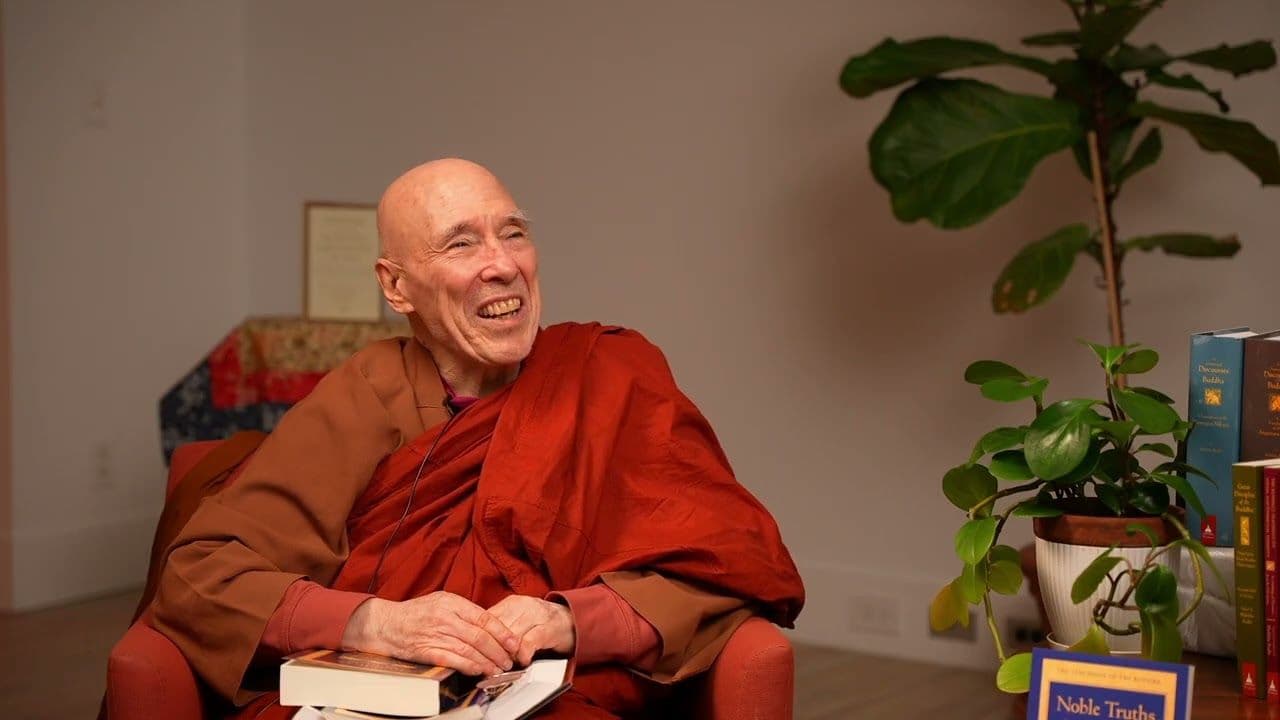
After completing his university studies, he travelled to Sri Lanka, where he received novice ordination in 1972 and full ordination in 1973. For many years he served as president and editor of the Buddhist Publication Society in Sri Lanka.
He has been living at the Chuang Yen Monastery since 2006. Ven. Bodhi has many important publications to his name, whether as author, translator or editor, most recently a translation of the entire Anguttara Nikaya, The numerical Discourses of the Buddha (Wisdom Publications 2012).
In 2008, together with several of his students, Ven. Bodhi founded Buddhist Global Relief, a non-profit organisation that supports famine relief, sustainable agriculture and education in countries suffering from chronic poverty and malnutrition. In May 2013 he was elected president of BAUS